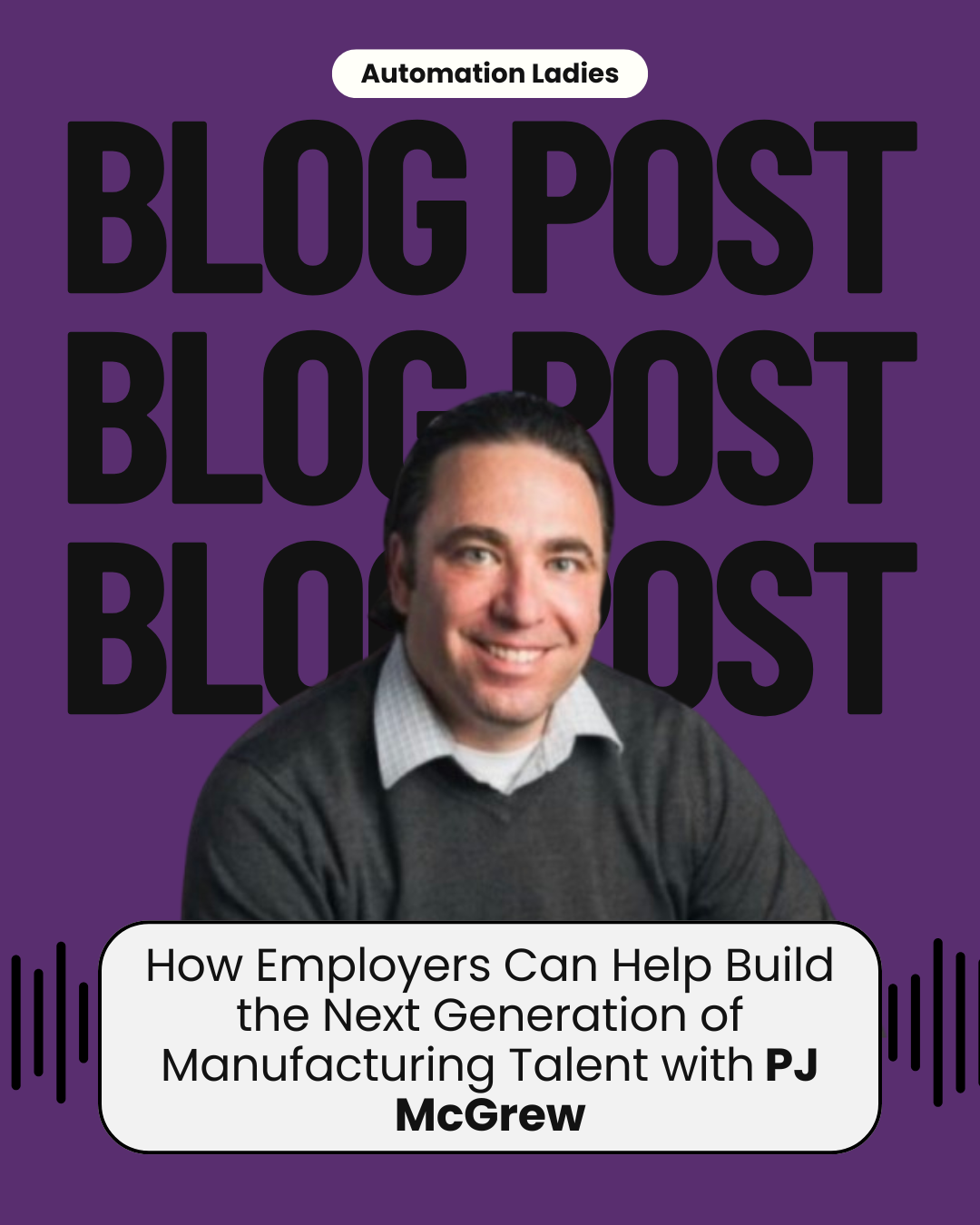
How Employers Can Help Build the Next Generation of Manufacturing Talent with PJ McGrew
Finding skilled workers has become one of the biggest challenges facing manufacturing today. Across the country, companies are searching for new ways to attract talent, develop technical skills, and prepare the next generation of industrial automation professionals.
But according to PJ McGrew, solving the workforce challenge requires more than hiring. It requires rethinking the entire education-to-career pipeline.
As Senior Vice President of Talent Strategy and Programming at Conexus Indiana, PJ leads statewide initiatives focused on creating a stronger workforce for Indiana's advanced manufacturing and logistics industries. His work brings together manufacturers, educators, community organizations, and government leaders to build programs that better prepare students and career changers for modern manufacturing careers.
Before joining Conexus Indiana, PJ helped shape workforce policy for the State of Indiana as the inaugural Executive Director of the Governor's Workforce Cabinet, where he became nationally recognized for his work connecting education and industry.
In this episode of the Automation Ladies Podcast, PJ shares why employers need to become active partners in education, how apprenticeship programs inspired by Switzerland are changing the conversation around workforce development, and what manufacturers can do today to help build tomorrow's talent.
Manufacturing Doesn't Have an Awareness Problem... It Has an Exposure Problem
When many people hear the word manufacturing, they still imagine dark factories, repetitive work, and outdated equipment.
The reality couldn't be more different.
Today's manufacturing facilities are powered by industrial automation, robotics, PLCs, machine vision, smart sensors, artificial intelligence, and advanced manufacturing technologies.
The challenge is that most students never get to see that world.
PJ explains that employers can make an enormous impact simply by opening their doors.
Whether it's hosting facility tours, participating in classroom presentations, offering internships, or mentoring students, giving young people firsthand exposure helps them understand that manufacturing is a technology-driven industry filled with exciting career opportunities.
As PJ explains during the episode, awareness starts with experience.
Why Employers Should Help Design Manufacturing Education
One of the most compelling parts of the conversation centers around a simple question:
Who should decide what students learn?
PJ argues that employers need a seat at the table.
Rather than schools trying to predict future workforce needs on their own, Conexus Indiana has worked directly with manufacturers to identify the skills companies are actually looking for today.
Those conversations have helped create new career and technical education courses built around real industry needs.
Instead of preparing students for isolated job titles, these programs focus on foundational manufacturing knowledge that allows graduates to specialize later as their careers develop.
It's an approach that benefits everyone.
Students gain relevant, in-demand skills.
Educators receive clearer guidance.
Employers help build the workforce they'll eventually hire.
Learning From the Swiss Apprenticeship Model
One of the episode's most fascinating discussions focuses on Switzerland's apprenticeship system.
Unlike the traditional American model of finishing school before entering the workforce, Switzerland integrates education and employment throughout high school.
Students spend time both in the classroom and working directly with employers, allowing them to develop technical skills, workplace experience, and professional confidence simultaneously.
Rather than asking teenagers to choose a career based only on classroom learning, they experience industries firsthand before making long-term decisions.
Even more impressive, most students who complete apprenticeships continue into post-secondary education after gaining practical work experience.
The result is a workforce that's both highly skilled and closely aligned with employer needs.
PJ believes this philosophy offers valuable lessons for American manufacturing as companies continue searching for new ways to strengthen the talent pipeline.
Manufacturing Careers Shouldn't Be Limited to High School Students
Workforce development isn't only about preparing teenagers.
PJ also discusses the growing importance of supporting adults looking to transition into manufacturing.
Through partnerships with Ivy Tech Community College, Conexus Indiana is helping develop shorter, employer-informed training programs designed specifically for career changers.
Rather than requiring participants to complete lengthy degree programs before entering the workforce, these condensed courses teach foundational manufacturing concepts in flexible, manageable formats.
Students gain exposure to automation, robotics, PLCs, CNC machining, maintenance, quality, and manufacturing operations before choosing an area of specialization.
It's a model designed to reduce barriers while giving employers access to a broader pool of qualified talent.
Building Better Manufacturing Careers Starts With Better Partnerships
One theme appears throughout the entire conversation.
Manufacturing cannot solve its workforce challenges alone.
Neither can schools.
Success depends on collaboration between employers, educators, workforce organizations, government agencies, and local communities.
Whether companies start by offering internships, mentoring students, participating in classroom presentations, or creating apprenticeship opportunities, every effort contributes to building a stronger manufacturing ecosystem.
As PJ explains, employers don't have to transform everything overnight.
They simply have to start.
Final Thoughts
Technology continues to transform manufacturing at an incredible pace.
But even the most advanced automation systems still depend on skilled people to design, maintain, improve, and operate them.
PJ McGrew's conversation is a reminder that investing in people is just as important as investing in technology.
By building stronger partnerships between education and industry, embracing apprenticeship programs, and creating more accessible pathways into manufacturing, companies can help shape a workforce that's prepared for the future of industrial automation.
If you're passionate about manufacturing, workforce development, engineering education, or the future of industrial automation, this episode is well worth your time.
🎧 Listen to the full episode of the Automation Ladies Podcast to hear PJ McGrew's insights on building the next generation of manufacturing talent.
And if you're looking to continue learning from industry leaders, innovators, and automation professionals, be sure to check out OT SCADA CON, where conversations like this continue beyond the podcast.
Bridging the IT/OT Divide: What David Ariens and Willem van Lammeren Want Industry to Understand