


 Apple Podcasts
 Spotify
 Amazon Music
 YouTube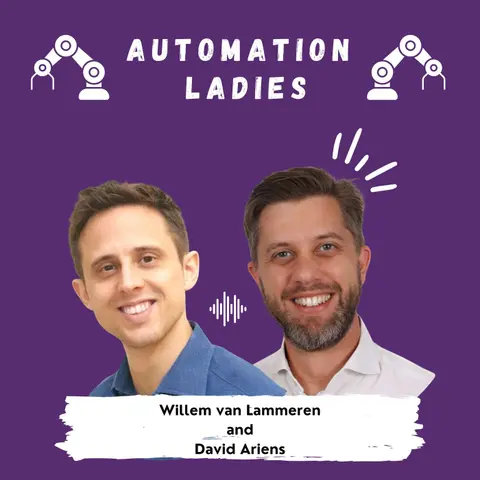
Your digital transformation plan is probably not failing because you picked the wrong protocol. It’s failing because IT and OT are solving different problems with different timelines, different risk tolerance, and zero shared language. We sit down with David Ariens and Willem van Lammeren from the ITOT Insider podcast to get honest about what it really takes to make IT/OT convergence work inside real manufacturing and critical infrastructure.
We trace how they went from plant roles at BASF to building IT/OT Insider as a “therapy session” that turned into a blog, a podcast, a live online academy, and now a new book, The IT/OT Handbook. Along the way, we talk industrial cybersecurity after Stuxnet, why vendors struggle to position products, and why most teams are not limited by technology as much as cooperation, politics, ownership, and decision-making.
We also dig into scaling, because proofs of concept are cheap and production is brutal. From “pilot purgatory” to the bus factor (or lottery problem), we unpack what it takes to move from a clever demo to something secure, supportable, and sustainable. If you care about DataOps, unified namespace thinking, industrial data platforms, or AI in manufacturing, this conversation keeps the focus where it belongs: the operating model around the tech.
Bonus: we’re giving away free copies of The IT/OT Handbook. Post on LinkedIn, link to this episode, tag Automation Ladies and IT/OT Insider, share what you liked (or didn’t), and say you want the book. First 10 people get a copy. Subscribe, share this with one OT or IT friend who needs it, and leave a review so more automation folks can find the show.
_________________________________________________________________
🎙 About Automation Ladies
Automation Ladies is an industrial automation podcast spotlighting the engineers, integrators, innovators, and leaders shaping the future of manufacturing.
__________________________________________________________________
🎤 Want to be a guest on the show?
https://www.automationladies.io/guests/intake/
__________________________________________________________________
👩🏭 Connect with the Hosts
Nikki Gonzales
Courtney Fernandez
Ali G
__________________________________________________________________
🎟 The Automation Ladies Community Conference: https://otscada.com
Learn more about the hosts’ industrial automation conference OT SCADA CON attended by 100+ automation professionals, engineers, integrators, and technology leaders for hands-on learning, real-world case studies, and meaningful industry connections.
🎬 Credits
Produced by: Veronica Espinoza
Music by: Sam Janes
P.S. - Help our podcast grow with ...
--------------------------------------------------
Want notifications of upcoming episodes & other Automation Ladies news right in your e-mailbox?
00:00 - Crossover Setup And Recording Chaos
02:59 - David’s Unplanned Path Into OT
07:56 - Willem’s Plant Background And IT Entry
11:33 - Why Industry Friendships Matter
18:37 - From Blog Hobby To Trusted Voice
20:03 - Hannover Messe Momentum And Big Guests
26:30 - Inside The ITOT Academy Format
32:10 - Turning Articles Into A Real Book
45:29 - Scaling Pilots And Avoiding Bus Factor
56:44 - Cross-Industry Reality Checks In Plants
01:06:39 - Who Should Read The ITOT Handbook
01:07:34 - Free Book Giveaway And Where To Find
01:13:08 - Final Thoughts And Stay Connected
Crossover Setup And Recording Chaos
SPEAKER_01Welcome to Automation Ladies, the only podcast we know of where girls talk about industrial automation. Hey, welcome to another episode of Automation Ladies. We're actually restarting this one. I'm gonna I can't not give the background here. So today's episode is a I I guess at this point I'll call it a crossover episode between us and the ITOT Insider uh podcast because we apparently can't record and we kept dropping the recording. And so thankfully my guests today are David and Willem from the ITOT Insider Podcast. And because they also do podcasting, they're like, okay, let's jump over to our podcast studio. And so here we are, trying again. Super easy. And and as we were also discussing, like, if you guys have listened to our podcast for a while, uh, thank you, because I know our production quality has been um questionable throughout the years. And uh they were just saying, yeah, we listened to some of the early episodes, and man, that was rough. Um and that's totally true. Uh, you know, producing a podcast is is harder than I thought. Um, it takes a lot more time and effort than I expected when we first started this. Um and luckily we're getting better at it, but still, there's there's always all kinds of stuff that can come up. And so I'm really excited to have these guys on our show today. I was on their podcast maybe a year or two ago, and we've been kind of having this in the works for a little while, and now finally the time is right because they are also releasing a book that I'm very excited to talk about, and and for you guys to get the opportunity to also uh get your hands on these books. Uh, we're gonna talk about that. If you stick around the end of the episode, how you can get one for free um from us. But yeah, welcome. This is gonna be a really fun hour, I think. We've already chatted for like almost an hour so far getting here. So, David and Willem, thank you so much. I feel weird welcoming you onto my podcast when I'm in your studio, but thank you for coming on Automation Lady.
SPEAKER_04It's totally fine. Like we're all engineers, you know. We just figure it out.
SPEAKER_01Oh my gosh, how many engineers do you think it takes to help uh a uh karaoke DJ fix his IT issues up on stage? And the answer is all of them want to, but the uh the karaoke DJ is like, stay away from me, you people. Um this was uh at Open Staticon last year. He was having IT problems, and every single one of our attendees is an engineer that just like there you could tell, like they were just like going crazy. They're like, let me let me just go touch it. Like, what's his problem? Why is he not fixing it? It's been five minutes, let me go touch it.
SPEAKER_04Poor guy. It feels so that it's the conversation we all seem to be having. Like, we see something and we want to jump on it. Like, let's let's let's fix the thing.
SPEAKER_03I'm I'm learned, David. I know if you wait long enough, the problem solves itself. That's right.
SPEAKER_01Oftentimes it does. Uh well, um, so I guess we're yeah, we're kind of like, this is interesting because we just answered this question on another platform, but I think for for the sake of the recording, let's let's do this again.
David’s Unplanned Path Into OT
SPEAKER_01Um so our standard intro is to try to get our guests to tell us a little bit about where they came from, how they got into industrial automation. Um and so at the sorry to have you have to repeat yourself, David. Um well, unluckily we haven't gotten to you yet, but we want to know a little bit about you, how you got to be where you are, and then mostly I think we'll spend the rest of the episode kind of talking about you guys together and the OTIT Insider and what what you guys have done with the book and and what those you know messages are uh and what value people can get out of that. But just a little background on kind of who you are and how you got to be here would be would fit our format, I suppose.
SPEAKER_04Hey, I'm David for those for those that don't know me yet. Yes, hi David. So my my my career in automation started purely by coincidence. So I'm a mathematical engineer, so not an electrical one or or um uh mechanical.
SPEAKER_01In the US, I don't think we have that term, mathematical engineer.
SPEAKER_04No, you should. It's super fun. It's super fun. So it's it's like it's it's it's a master's degree in engineering, um, but purely focused on on data, on mathematics, on early AI, uh, actually. Yeah, so yes, I I did the support factory machines and the machine learning algorithms, etc. etc. Yeah. Um, and I think I think now it's more relevant, it's even more relevant than ever. But with my mathematical background, like for me, working in the industry, and in then in my case the chemical industry was really never something I considered. Um until I met my to be boss um at a at a at a at a guest lecture in in university, um, and and he was talking about what they do at BASF, so because that's where I worked for 12 years, and I started talking to him, and he went like, Yeah, but I'm looking for people with a mathematical background, so why don't you come work for me? And that's actually what brought me to working working in the industry, first as a data scientist, mathematical modeling type of guy, super fun. Also gave me insights in how how these equipments work, but then again from a mathematical point of view, so that's that's super cool. Yeah, um, and but I I always I was always interested really by the automation part with uh by by the IT part as well. So I really quickly moved um from uh data to um to the systems side uh basically um first doing small uh mobile operator projects, really cool. Um that then that was actually just after Stuxnet. So we were getting concerned about cybersecurity, and then uh BSF gave me the uh opportunity to actually uh be in charge, lead their their global cybersecurity program to cover together with another couple of other uh really cool colleagues from different regions. So that's where I was like head down for years in in cybersecural, industrial cybersecurity. Really, really cool as well. Could also travel the world, go to plants, do audits, make changes, fight the bad guys. Um, and then by the end of my career over there, I was responsible for the entire digital thing. At that point, things started changing, also from a political point of view, also from a cooperation point of view, and that's a big part of our book. Um, and I decided to um switch sites and I started working within the Aviva uh ecosystem. So I worked for a couple of years for um Aviva Select in the Benelux, so that's a distributor of Aviva software, um, which is really cool because then I could also learn what it takes to uh sell uh stuff. That's really like another point of view, and the other cool thing is um like Aviva is historically typically uh well, let's say Wanderware is historically very, very strong in food and bev and infrastructure, um, which gave me a lot of exposure to that type of uh companies as well.
SPEAKER_01Okay, very cool. What did you think you were gonna do with your degree when you first got it? Did you know? Did you have an idea?
SPEAKER_04Zero, zero clue. Like like like like I was just going like first of all, I thought like I'm gonna be a structural engineer because they build bridges. Uh and then and then at some points uh one of my um one of my roommates uh said like you know David, why don't you consider mathematical engineer? And I'm like, Yeah, okay, sure, fine. Um I actually I didn't I didn't really had a good idea. Um, and that's that's something where I if I if I look back and I'm still I'm still involved with the uh educational program at the university here in um in in Belgium, I think one of the really really important things is that we that we that we try to understand or yeah that we teach or explain to students what is all possible with their degrees. Um and uh a career in the industry is is uh or in the the the more harder industries, the critical infrastructure type of industries is definitely possible as well.
SPEAKER_01Yeah, yeah, absolutely. I've also never known what I wanted to do, so I was just always curious. All right, Willem, your turn.
Willem’s Plant Background And IT Entry
SPEAKER_03So I don't know if people hear that our English is not native English. Uh we're based in Belgium, um, and like a very good Belgian, so I I I studied chemical engineering, but I I wanted to do something else. So I had a couple of stints in the chocolate industry. Yeah, I was making frozen pastry in Spain, obvious place, South Spain heat freezers. Uh, then I went on to work uh in beer. I think I skipped waffles, um and then I went uh straight to to chemistry actually. So in Belgium, I don't know if people know there's Belgium, Netherlands, there's a really big cluster of chemistry. Um and I entered through IT. So they were looking for somebody who had seen a plant and could maybe talk to somebody on a shop floor uh because they were doing some IT stuff for production, and that's how I got in. That company was called BSF, um and then our paths joined, and you know, we became partners in crime, leading the digitalization uh in the side of Antwerp, which is a big site, yeah, absolutely.
SPEAKER_04So we were colleagues for multiple years, and then we not on the same day, but we kind of left the company around the same time. Uh I don't know how many months difference there was, but not too many months. Um and then um, like in the beginning, we were just looking for an excuse to keep on meeting each other, Nikki, because you know, um colleagues turned friends and we just went like you like we we we we still wanted that we we shared a desk for so many years, like our world was just the two of us thinking about stuff, walls filled with paper, diagrams, and plans, and me breaking down David's ideas all the time, vice versa as well. Uh no, no, no. But the it's um it's yeah, like we we missed that interaction, so we just started meeting each other randomly, and that's actually when the ITOT Insider was um was was born, or the idea of the IT insider came up. Was um Willem uh in his new job faced similar or or or or even different problems uh that than than we were we faced together at BASF. And then me, my in my new job, I also faced a lot of similar and different problems in the I would say in the very broad digitalization and automation uh landscape. But the interesting thing there is that many of those problems they had the same type of root causes. And and and like I was sitting in those meetings and I was I was looking for ways to explain something or or frameworks or having some shared language, and and then we thought, like, why don't we just start writing down the things we encounter as a blog? Um we often uh say that it's a bit an um an um uh it's a therapy type of session.
SPEAKER_03I think it it's born out of frustration. Yeah, like why don't people understand this? Okay, maybe we should write about it. And while you're writing about it, you realize that you yourself actually don't really understand it yet. And through the process of writing and talking and thinking, uh you start to distill the problems into their essence. At least that's what you think or hope that you're doing, and that's what we were posting and still are uh trying to get behind what's behind trying to find what's behind those symptoms that we see.
SPEAKER_01And that's really cool. Like, okay, a lot of things running through my head.
Why Industry Friendships Matter
SPEAKER_01Making friends in the industry, I think, is is not something I really thought about as a big part of my career or that it would add value to my career, but now that I am where I am, I realize it is actually really important. Um because like you can like you're you go to work and you've got your your bosses and you've got your uh triorities and all these things, and and to not to be able to have some like outside people to talk to about that kind of stuff where it's not formal, it's not um and you can't come home and talk to your family about this stuff.
SPEAKER_03They don't be quiet. Like Do people know what you do people know what you do, Nikki? What do you tell your friends?
SPEAKER_01They don't know at all. Um they they kind of have no clue, right? And they might remember some words, but they make zero sense. Um so yeah, it's it's really nice when you can make friends at work, and then certainly like to me, the even from my first job, like some of those relationships have carried throughout the uh throughout my career. Um but just like the more of them that you pick up, I think the more resources you have, and like part of it is you you kind of need you need some therapy sometimes with that, or you just need somebody that understands like why you're bitching about the thing. Um but that's something that I think if you're early on in your career and you're listening to this, like don't underestimate the non-work related, like just the ability to make friends either at your job or at industry events or or any associations that you go to. Um, it can be hard to immediately see the value in spending that time. Um but I think it pays off in so many ways that that you have no idea how how that's gonna work, right?
SPEAKER_04Um and it's a it's a small world after all. Uh well, yeah, like like okay, we are from Europe and and obviously our network in Europe is is is is is very strong. Um and and and I'm sure that in the US and or North America in general, you probably also have this have this yeah group of people. Um but but you just you just keep on running a crew.
SPEAKER_02Yeah.
SPEAKER_04You keep on meeting, you keep on finding the same people all over, and and yes, they have different roles, but in the end, we're all trying to do the same, I guess. It's either being on the customer side or being on the vendor side.
SPEAKER_01And and don't discount one and the other. Like that person is likely to change later on. They may be on the five side of what you're selling later, or or somebody that can help you. Um, so like I also have seen this attitude. Like, I have a friend of ours that was on the show as an independent business owner um a couple years ago. He now has a job uh with the company and he he went on um a sales call, and he's not the one in the sales seat, but he was like, I didn't understand like why people were treating me like that. But now it's like, oh, now you're in sales, right? And it's like the guy has been integrating stuff for years. He's like just as much, he's just as knowledgeable as the customer, if not more, about these things. But because he walks in in a vendor hat, right? All of a sudden he's not treated with that respect, or it's assumed that he's just selling something. And like, yeah, there are people in our industry that just come in and they maybe don't know a ton and they're just selling. But I think for the most part, like a lot of people, and I particularly love when I meet people that have played multiple sides of that, because you start to understand so much about how how much value everybody can bring in the and you need everybody, right? You need the people selling the specialty solution that you don't have the time to dig into, you know, for two, three years before you look at it as a solution. Um, and I think a lot, you know, and I I don't know what the percentage is, right? Like how it breaks down, but most people in our industry that are here, even if they are selling, they're here to solve problems, right? They're here to use their expertise, their network, their whatever resources they have at their disposal to help you. And, you know, ideally they sell something at the end of the day if the solution is right. But I I've met more than I would say more than less salespeople in our industry if they have any kind of technical background, but they're not there just to sell, they're there to solve problems.
SPEAKER_04Uh exactly. And so to that point, so I I obviously I I I face the same switch. So all of a sudden it's it's me trying to sell you something in pla instead of me just being David. Apparently that's that's that's a difference, but okay. Um and and and so I I really really enjoyed my time within the Aviva uh in the within the Aviva family, but but once we started becoming known for our ITOT brands, something changed because people they started looking at me not anymore as um a random sales dude or pre-sale dude or whatever my role was, um, but somebody who is um trying to make sense of a I would say of the broader landscape, and I and I really saw that that yeah, that's that narrative towards me at least, um, changing. And that's also when we got to understand that we were really on onto something, yeah. Because in the beginning, again, ITOT insider 100% hobby. Um but but but with the with the years passing, um we really saw like okay, people are they they they do want to get some advice, they do want to get some um yeah, framework. So they and and and that's really what's what at least for me made then the the this and and Willem is still working in the chemical industry, but but for myself, I it's now I'm just fully ITOT insider right now, um, which is it's also a challenge to be fully self-uh self-employed. Um but but um but I I I did see that changing, and it's really cool to have people now coming to us saying, like, David, just give us some some broad advice, and then we can we can take the next step and we can we can reach out to that vendor or that vendor or or discuss that architecture or whatever. And that's really what is what is really cool. I I think at this point in time in our in our little little brand.
SPEAKER_03Uh but David, even vendors themselves even vendors themselves are wondering like where do we position these products? What what how how what are the problems that people are facing and how do I make sense of this?
SPEAKER_04Um how um do I onboard my own people who don't who might not all have an OT background? That's also a question we often get. Like, like like help us giving them because it's it's easy to say like we only want to work with people who have experience in the industry, but good luck finding them, A, and paying them. Um so so, yes, obviously, they need to hire people um from the IT world, from other industries, directly from school, whatever. It obviously makes perfect sense. Um, and then they they also come to us, then they go, like, can you also help us with that part of the of the process, which is really, really cool, by the way, and honestly, something we didn't uh anticipate on when we started with, for example, our academy.
From Blog Hobby To Trusted Voice
SPEAKER_01Okay, tell me about so let's talk about the progression. You started I uh ITOT Insider as a blog, as a hobby, between you guys talking through stuff, um, comparing notes, learning stuff. How when did it when did you start a podcast? And then tell me what like what yeah, what is the what has it grown to? Because I didn't know that you had an academy, and that may be my bad. I didn't do my background research. That's perfectly fine. Tell me what is what are all the things you you do, and how did you I think it went quite quite naturally.
SPEAKER_03Like first, yeah, we had lots of things to to write and to think uh about, so we're really focused on on the writing part initially. Um and I think it was we were like, let's try something different, let's try to invite some people we know that we find interesting in podcasts, um as a different way to to explore what's out there, because I mean we know tons of interesting people, yes, and and and also you can only write that much.
SPEAKER_04There is there is there is an upper limit on on what you're writing from our own experience. Um so adding a podcast to the mix is is something really really natural. Um and it went also really yeah smoothly, and we really enjoyed having guests on the show. And that that also again broadens the um the the network.
Hannover Messe Momentum And Big Guests
SPEAKER_04Um and I think um, and maybe Willem, you have to tell the the tram story at Hannover Messa, but what we what we what we then did, and that was also just just an idea, was before Hannover Messa, not this year but last year, we thought like, can we do something? Like something which makes sense but leads up to Hanover Messa because we were planning to go there for a day or so. Um and I think for those who don't know Hanover Messa, uh maybe from the North American audience, it's uh um what is the biggest automation fare um in in North America?
SPEAKER_01So it's like the automate, but probably bigger because it's been around for so much longer. It's like IMTS and PACExpo and Automate all like smashed together is is yeah.
SPEAKER_04So that that that type of that type of of conferences like gigantic huge.
SPEAKER_01Yeah, Hanover Mesa. So my dad, my dad is an electrical engineer um in and we used to live in Iceland. And so in the in in the early nine in the 90s, he was working in the industry, um, and he would go to Germany every once in a while to go to Hanover Mesa to see like what because there was back then there wasn't like the internet to see what products were available. We're very small countries, so we didn't have a lot of distributors like bringing products, you know, and so he was like, Yeah, I was always really excited to get to go and like see all of the things. And it's funny now because we have the internet to see everything, but we still want to go see all of the things. Because I think with like with the with the industry we work in anyway, it's like it's you can't get the full picture of everything just by doing an online demo or reading the data sheet, like certain machinery and certain types of things. A you just want to see it or hear it or touch it or whatever. And the other thing is like just discussing it with someone in front of the thing. Um there's there's that's why these shows I think are still around. Um, but it's funny because he was telling me, he's like, Oh yeah, I went like that's how I found out what was. Like for the next two years, like what innovations I could possibly bring back to my country. And uh yeah, he like even made a friend on the train somewhere and like ended up staying at somebody's house, and then the next time he went to Hanover Mesa, he's house again.
SPEAKER_04That's so cool. That's so cool. And and the thing is, in the end, also with all the AI now, people still buy from people. That's that's what I that's what I also learned in my you know, I'm sure you you have the same experience, Nick, in your in your job with uh uh uh with Wine Tech, I guess. It's it's now yeah. So but it's it anyway. So back to Hanover Mesa, we were thinking what should we do? And our idea was you know what? We just had a we had an art we published an article on industrial data ops, which went kind of viral um um within our world, which is still very small, but like in our you know, viral in our world is it we don't need too much, like we're 200 people already, great. Yeah, it was actually I think a couple of thousand people already. Um and we got we got we got some amazing feedback. So we thought, like, you know what? Let's just reach out to all uh big names and ask whether they want to come on our on our podcast. And to our big surprise, like like we we got all the big ones. We got the CEO of Litmus, we got the CEO of Influx, we got um uh we we got we got the CTO of iBytes uh and etc. etc.
SPEAKER_03So we went like oh wow that that that that was it was very intensive. I think Nikki we were doing like two, three podcasts a week easily. Yeah, very intensive.
SPEAKER_04Uh that that was that was a very heavy. But having said that, that's actually what opened I'd say the the door to the to stepping from a block, uh sorry, from a hobby block to to being something which is much more than that and and and also a company. Um because when we were at Hanover Messer, when we people started talking to us, we we to us we we we got so much feedback, we we met readers, we met people who said like but for us it was the first time and Nicky like this like all of a sudden you're meeting people who go, like so I I read that article and you said that, and and I'm I that's I think that's a really good idea, but you know that paragraph, I don't really agree with that. I went like, yeah, but brilliant. Like let's let's talk more. Um, and that's when uh we were sitting on the on the tram somewhere, and then um I think Willem um at some point you started saying, like, we have to do something with this.
SPEAKER_03Yeah, I I think I think there we had like the idea we should do something. The advantage of having your own company is yeah, you don't need to ask for approval to anybody. It's like you if you want to do it, fine, make it happen, you pay for it, whatever. So it's like maybe we should do an academy. Uh, and I think one of the first things that I wanted for the academy was like a cool certificate. Like, I hate those generic certificates that are just like stupid paper and something in PowerPoint that you throw in the media.
SPEAKER_01Okay, so tell me what's cool about it.
SPEAKER_03I mean, we we looked for an artist to draw something in the theme. You know, it has a bit funny, has elements of the course, etc. So, like I really wanted that. And then the content, okay. We had enough ideas, and then okay, we said let's start and try to make it. Yeah, yeah.
SPEAKER_04And then that's and that's basically the story because then we just we we launched our academy, um and and and to our um, yeah, well, obviously, we hope that people would be interested. Um it's still nice. Uh, but it's really really nice if people start um racing for for for for the course, and I think you went through the same with with OT Skada con. I I can imagine it the first time you also went like uh do people actually want to pay for this? Yeah, yeah.
SPEAKER_01And then people pay for it, and you go, Oh, oh my, I hope I hope they actually like what they get.
SPEAKER_04Yeah, no, no, no, no. I was I was super stressed. I I'm typically I'm perfectly comfortable talking to thousands of people at a big stage. Like I'm I'm zero stress for that. Yeah, but I was I was so stressed out before we did our first our first session. Um exactly to your point, Nikki, I was just so worried that people would go like, yeah, well wait, like, wait a second, like we didn't pay for this.
SPEAKER_03No, actually, it's it's super fun. Does it kind of I mean we've we've had people from from Portland, from Australia, I mean everywhere in the world.
SPEAKER_01What's the format?
SPEAKER_04Is it just an online course or is it uh something that's it's live,
Inside The ITOT Academy Format
SPEAKER_04so it's uh it's it's yeah, it's it's online but live. Um yeah, um so it's me and Willem. It's it's like the the style you know from from from from our podcast. Um it's very, very condensed. Uh um so we have um we have a structure where we where we talk about um understanding, so uh have IT understand OT and have OT understand it. We talk about cooperation, so how do you work together? Um now the format has moved on. Uh obviously, uh, if we compare the academy of a from a year ago to today, um we got a lot of feedback, so we are we are improving the program, and one of the the biggest things we got from from our previous groups was um we didn't really have a hands-on architectural uh session. Um and that that was like the most heard feedback is like we want to see you guys draw architectures, and we want to ask questions, etc. etc. So we have we have two sessions now. One session on more data platform, data ops, UNS concepts, um, one really hands-on drawing architecture sessions with a lot of interaction, a lot of feedback. Um, and then the the the cool thing, I uh I still like that session the most is we have this case study. So um we invented um uh an industrial bakery, we call it bakery sweet harmony treats. Um, and they have a very big problem um with digitalization, they need to solve it so big, Nikki, that if if you're not able to solve it, the the company will go bankrupt. Um it's a bit over exaggerated.
SPEAKER_03I do have to say, like, creating the material for this. Um first of all, it's not a the the academy is not a rehash of everything that we've written. No, we actually say like people read this and this so that you have the background so we can go deeper, answer questions, etc. Um, for the use case, we had to create like the story, the the backstory, the who's involved, and what the problem is. So we did have um uh our backstory is a couple of emails between the CEO, the CEO, CIO, stuff like that. Um, we did get them checked by people who interact frequently enough with C-level people. They said, yeah, absolutely. It's like the the backstabbing is there, the the politics everywhere. No, just fine. So quite realistic uh from that aspect. Yeah. So you don't get a technical problem, you get a business problem filled with politics.
SPEAKER_01And I think that that's something that is probably I'd say missing. Like a lot of training is focused on just the the technical aspect of it. Yeah, not the change management, not the people stuff that you need to deal with to actually be able to get your get buy-in for your solution, or God forbid you're the one that sees the problem and have to pitch it being solved. And and your C-suite doesn't see that. Uh, we had a really cool, we had a really great session this year at OT Skatacon from um a gentleman named Nate Piran, uh, who leads digital supply chains at uh new brands and he also does some consulting and stuff. But I'd say a lot of what he spoke about to me was I I would have thrown it out like immediately because it's just for such big companies, because like he works for a huge organization with budgets for I mean, there's no budget constraint to do things right or to do things in a certain way that like may not always be practical for the long tail of other manufacturers. But the stuff that made me say this is relevant to everyone in this room, even if you're never gonna touch any of this suggested like architecture, right? Is how how you talk to the C-suite about this as an engineer. Because I don't think that that's that's not something you learn anywhere formally. Um and that's that's a pretty cool thing that you guys are including in that because you've seen that be a big part of these problems, right?
SPEAKER_04No, but I actually I'm I'm happy that we're having this conversation because I I don't think that on our on our on our page on our ITOT inside uh on our ITOT Academy page, we really mentioned the fact that uh it's it's indeed more business oriented than than than purely technically um oriented. So I have to update that.
SPEAKER_01But you're welcome for this marketing.
SPEAKER_04Uh the the the the cool thing is that you have these these groups with people from all kinds of companies, from end users and vendors, etc., and they all come together. And that interaction is really important. And another thing we we are you can only go so far, but um we really try to make them interact as much as possible in the group to learn from each other, because that's where you get these obvious almost questions, like people who come from the IT site um and they are sitting together with somebody from like really an OT background, and then the the the IT person or IT vendor or whatever, they go like order a server for that, and then tomorrow we're gonna start working on this problem, and then and then the OT guy goes like Yeah, it's not yeah, it's like the IT timelines and OT timelines.
SPEAKER_03Uh somebody said, like, this problem cannot take more than three months, tops. And the OT guy is saying, I'm thinking more about a year and a half, two years. And I'm not saying who's right, who's wrong, but just getting that discussion, talking to the to people with different views on the same reality. I think that's really enriching, and that's something that we also really try to put in a lot of communication, a lot of cooperation with people that you normally don't work with on these problems.
SPEAKER_04And and then like um so that that's the academy, and that's the thing we are now running, and we're trying to perfect as much as possible.
Turning Articles Into A Real Book
SPEAKER_04Um, and then then our last uh our last baby is is indeed the the ITOT the ITOT handbook. I actually have a a pre a pre-run uh already with us because the the actual one is when we are recording the podcast, not yet uh in our hands, but um, but it will be there early October. We have been working on the book as long as we have been working on our blog.
SPEAKER_01Okay, so did the idea come around the same time and you thought about writing a book, or or you wrote a bunch of blogs and then we're like we should distill this into a book.
SPEAKER_04That's actually Willem's uh um I wouldn't say fault, I think brilliant idea was Willem's idea was let's start a blog. And then we went like, but what should we write about? And then I went like, How hard can it be to write a book? Let's start with writing a book, you know.
SPEAKER_03And I was like, David, I think that's really hard to write a book. Yes. So then we went back to our he was like he was like, he was like six months, six months. I'm like, I don't know, but you know, you start. I think it it's good that there was some the he was a bit naive in that because you know, otherwise, if you would known Yeah, I will say that about both the podcast and OT Skatacon.
SPEAKER_01Thankfully, we were naive enough to not realize uh the amount of work that would go into it. Because any sane person would say, absolutely not, that's a terrible idea. You should not you should not do that, right?
SPEAKER_03Well, if you if you get the book, definitely read the acknowledgments at the beginning. I mean it's clear that I'm gonna leave it as a teaser. It's like read the acknowledgments at the beginning.
SPEAKER_04But so the the the the I think the good thing here is that while we were writing our first articles, those were already like like the the reason why we started writing certain articles was that because there were certain parts where we thought, like, okay, this might end up in the book sometime in the future. At that point in time, maybe not within six months anymore, but um uh and and and so so for us it was a little bit um validating ideas um and getting feedback from a lot of people, especially if you look to the very early articles. You know, that we we spoke to so many people, um, or simply just presented it at so many conferences, uh, that you really go through those iterations which are yeah, apparently needed.
SPEAKER_03No, I think it's useful to see what resonates with people. Uh like we had a couple of concepts and uh frameworks, and some of them just didn't stick, and that's fine. Uh that's good feedback. I think what's also different with a book compared to a blog is like in a blog we have a different way of thinking when we're writing. It's like I want to write something that's basically just one concept, because the human brain cannot handle too much. Just one concept, so not too long. It needs to make the person feel smarter at the end, and they need to be able to explain it to their boss. So you cannot write a whole 5,000-word article and expect that to happen. So it needs to be really condensed and focused. That's a limiting. So with the book, you do have the freedom to go really deeper in those concepts. So, not just in the writing, also in the thinking. So we had lots of iterations. So even though we had a good basis with whatever we had written already, just revisiting it usually meant refining those ideas or you know, changing them slightly because you can add more nuance to them. So that was that was actually the fun part.
SPEAKER_01Some of the articles got a lot of read like a lot of people read them and then responded. I'm sure you you do you have comments on the blog?
SPEAKER_04Yeah, so we for some reason people don't really use the comments section on on our sub stack too much. But for example, LinkedIn, you know, yes, definitely via LinkedIn and and mostly just in person.
SPEAKER_01Um at a show saying, I read this, I I I really agree with this, but I have something else to add, or I don't agree with that. Like that, I'm sure just gives you so much more to draw from and can, you know. And and the concept I think of a book is too, like you expect that somehow it has maybe more authority than a blog, right? Or it's it's more of a definitive source of information somehow than some like blogs are kind of like, yeah, something I thought of yesterday, I can publish that as a blog. It doesn't have to be the end all be all of something. But I feel like as a as a somebody that buys a book, I'm like, I want you to have really thought this through and like you're making a point that I should really take home.
SPEAKER_02Yeah.
SPEAKER_01Um, and and so I'm sure having the ability to kind of get some feedback and then really enrich those ideas um may have probably made the book better, right? Than and then if this kind of in your brains.
SPEAKER_03That's something you carry with you also while you're writing, is like it's a bit similar to like, are people going to come to Skatacon? The same thing is like, is what I'm writing absolutely good? Is it like, does it make sense? Did I take into account all the different viewpoints? Do I contradict somewhere? So you're it feels like it never finishes, but luckily basically had a good editor uh who helped us with that and pushed it on us down the deadlines, otherwise it would have taken six years.
SPEAKER_01But I was saying about OCatacon actually, this time around, I was like, man, we only have once a year to do another iteration, like to tune the loop. And I kind of wish that I like could do it more often, right? Because that feedback step, the step of somebody going through the thing and then telling you what they think about the thing is so valuable.
SPEAKER_04Absolutely.
SPEAKER_01And and and I wish part of me, I was like, man, yes, like I will make that better next year. But it's it's like the fact that I can only pull once a year to me is a little bit frustrating. Because how many times is it gonna take me to perfect this thing? Obviously, it'll never be perfect, but I'm like, I feel like I need to need at least 10 years before I've said like that I've gotten enough feedback loops to act on, and then the ability to actually implement that feedback to get to a point where I think like I have a good product that and and part of that's my ego, right? The the product really isn't my thing, it's it's also the community that comes together, and so it's the quality of the speakers and the quality of the attendees that honestly makes it the event that it is, not not what I say. My main thing is I feed people, and so the feedback was the food good. That's what matters to me a ton. Um, and I don't think that we would be able to do the con at all if it um if we didn't have like the network that we do and the quality people that show up because consistently the top feedback we've gotten is what were what what are your favorite things about it? The the quality of the speakers and then the one-on-one conversations out in the hall. Exactly right between the network. Because those it is the same thing. Those speakers and those attendees are now like talking to each other about projects, about you know their ideas, whatever. Um and then the food and then the karaoke. So like making an experience where people can connect and people can look forward to seeing each other every year, not just us, right? Um, anyway, this is not my parallels to how we get together in industry and kind of make our own ways of enriching what we know and and our careers, right? Like it's part of it is about the job, but I think part of it is about what you as an individual decide to do to try to make yourself more valuable and and or help other people with what you do.
SPEAKER_04And read a book, that's also the scary part because the the thing is never written and like it's done.
SPEAKER_01How many do you think how quickly are you gonna be like, oh we need to do another revision? Like we need to how quickly does this world move? Because also, like you started writing the book three years ago. Do you feel like the concepts are c are like slipping out of your hands as you're writing them and printing them? Or or is this because we're tied to the OT world, like we can actually the same concepts are gonna apply for the next 10 years?
SPEAKER_04No, no, no. No, so so I so obviously, obviously, the there will be a need to do and do do a revision in a couple of years. But um let's hope that there isn't a possibility to do a revision. Um but the we we wanted to write something which is kind of timeless, or at least doesn't get feel old after six months. Um, so that means that in the book, the the book is actually more a business book than it is a technical one. Um it's about answering the the bigger questions, the why questions, it's about setting up it's really like the biggest part of the book is really about how within a company how do we actually work on digitalization? How do we decide what is what is important, how do we um break down the silos when needed? And by the way, sometimes silos are also really really great. So um it that's what the book is all about, and then the last part is on data foundational stuff. We didn't add any architectural diagrams in the book. So for those who are hoping to find architectures, and should I pick the MQTT broker and instead of uh OPC UA or should I combine the two? Sorry, we're not gonna answer that in the book. Um, that's what we answer in the academy and on our blog and on our YouTube channel or whatever. So you you can find it over there.
SPEAKER_01Because the answer is it depends on your application. You can't make a sweeping statement like one is the most appropriate. Exactly, yeah.
SPEAKER_03And and it changes quickly also with time. Yeah, uh, it changes with the maturity of your company. I think also what I see uh is that I mean, we're not working for the Googles or the or the Amazons of the world. I mean, we're not at the cutting edge of digitalization in our world. The problems we have are rarely limited by the technology.
SPEAKER_00Right.
SPEAKER_03Usually it's everything around it. It's like, do we have data? Are we managing it properly? Damn it, those IT people, they're annoying. Um the CEO getting frustrated with the CIO and vice versa. I mean, these problems, in my experience, matter ten times more at least, as a technical solution. Do I take a MQTT broker and OPC away? Honestly, I don't care. I think they it will work. Um, you just need to get the bigger vision. How do you sell it? Those things I hope will stand the test of time slightly longer. Yeah. And uh maybe a couple of years. Absolutely.
SPEAKER_04So it's it's it's really more that side. So we I I hope that it's it's a book who gets written, uh, who gets read by as many people as possible, but especially those who are in a team lead function, in a management function, um, maybe even people at that CIO, COO level for the smaller companies, maybe not the really big ones. I don't know if they have time to read it, but if so, please do. Like, like, like just this morning, I got a message from the director of an of an ice cream factory. Like, like, like, how cool is that? He said, like, yeah, David, so we are applying these and these concepts uh from your blog. Um and and and and and yeah, we have some questions about that, blah, blah, blah. But but like that's why we do the stuff we do, and that's why we why we really hope the book is.
SPEAKER_03gonna is gonna be yeah most valuable um let's say it or yeah yeah I think giving a language uh two things helps and identifying the real problems yeah uh that's I mean like you said David the book is split in three things like the first one is trying to understand the other side I think we've worked on the engineering side we've worked on the I mean I'm working on the IT side of things people are not annoying on purpose they're all trying to do their job yeah but trying to understand why there's this friction will help you in the next step and the next step that we have in the book is about how do you work together because working together takes more than just saying guys let's work together I mean that does that solves absolutely nothing so we really have a big big part on how you could shape cooperation to your needs. Yeah like it's not only projects it could be smaller things and sometimes even silos like David says so we really have a good part exploring and giving people language to what cooperation means and these are patterns we saw and experienced ourselves. Will you be able to apply them one-to-one? Probably not but just having those concepts will give you the tools to make your own version and only then at the last chapter Dave do we start to talk about data platforms.
Scaling Pilots And Avoiding Bus Factor
SPEAKER_04But without those first two if you don't understand each other and you have no way of cooperating I mean good luck trying to digitalize it's what people say yeah so how many percentage of of technology technological projects fail there are different percentages floating around it depends a bit on who you ask.
SPEAKER_03But also now with with with AI like yes sure many box but how many of those uh how how how many of those POCs actually get to be get to scale yeah I mean if it was easy to scale from idea to something big and that's easy to roll out there wouldn't be like a pilot purgatory. Yeah it's really hard to scale it's easy to build something quickly it's hard to make it scalable no it's that last 10% and or or whatever it may be 5% off I see the pock the especially now with AI programming something that works that's the easy part. Yeah building something that scales and works on a big scale and doesn't need 50 people babysitting it that's where the real challenge is.
SPEAKER_01Yeah we um we actually at OT Skatacon we have a technology raffle. So because we built something different from a trade show um we wanted to let sponsors participate in some way without sitting in front of the engineers trying to solve it like here are the five reasons you have to buy my PLC yeah so we said if you're a vendor please buy a ticket and come learn and network with everybody else and you can you know if you want to be gross and try to sell during the networking breaks and that's up to you. Nobody will want to be friends with you. But the point is is these long-term relationships they will probably result in something good for you. But the other thing is like if you really want to present a product or you want to pitch your product then give give the product is like the easiest way for me to be like then have somebody actually get to see your product. And so we do this raffle um and and so the the attendees can put their tickets in any of the items that they want to win. And the idea is only try to win stuff that you want to try to use or try or you have some use for um and then that's the leads that the vendors can get they're like hey these 10 people wanted to win your product only this one person won but like these other people are clearly interested you're welcome to reach out to them and offer them a discount or a demo or or whatever.
SPEAKER_04That's a really good idea.
SPEAKER_01Yeah thank you and the engineers get to look at the stuff without a person on the other end of the table or a booth like asking them questions. But it was kind of difficult for us to figure out how do we like manage this raffle in this way because raffles are typically designed to just be like hey you want a thing right and we designed a different way of raffling for us. And so we used to do these paper tickets and like we we were looking for online software to do it but no the none of the on existing online software like managed it the way that we wanted to manage it. And so I was like well you we can all vibe code now why don't we just vibe code our own raffle app and but of course I don't have time for it. So I was like somebody should do this. And one of our rockstar volunteers Courtney pendant just like picked this up she's like yeah okay I'll try that um and so we vibe code she vibe coded a raffle app for us. But of course in true true fashion we didn't test it until the day before and we we hadn't like it was in a demo environment and then we put it into production and of course it had a few bugs and thankfully our uh resident IT OT uh master wizard Albert Fernandez was there to along with doing all the A V stuff and so they were able to fix most of the bugs like in real time and we got the raffle up and running on the second day of the show. But then what happened was we didn't realize like there was a billing limit on the usage because it's an AI like platform app. And so at one point it just stopped working. And we're like wait what happened they're like oh yeah I I scanned the code but now it just is not working and and at some point somebody was like oh crap it's like we ran out of tokens and yeah and it's just like these are things that like they come up later on like we thought we had like we had a 90% done app and a week two weeks before the event.
SPEAKER_04Exactly what is scaling is what what scaling is all about and and and that is why yes it's good that you're able to like we used to you people used to build their own macros in Excel and then they started building their own power apps and now they vibe code stuff and that's that's all good. It's fine.
SPEAKER_03It's fine that's good. I mean it's great yeah I mean your use case is great.
SPEAKER_01But and the question isn't and and this relates back to how you frame it in the book right now and this would be a topic that would like just like we were talking about recording software like every few months they add features to where they outdo each other and it's like which one am I you which one is the best one? I don't know. Maybe last year this one was the best one. And same thing like you can vibe code everywhere now you can use Claude you can use Google you can use you know specialty apps like Replit and base 44 were the hot thing like a year ago and now you can just do it in codex and you don't even need a you know it depends like do you want it to arrange then host the backend for you or do you want to just create code? And it kind of doesn't really matter. It's like you have to have a framework and a process of how are you going to take this from from you know POC to production where are you going to host it? How are you going to scale it? How are you gonna handle security? None of those things really speak to which vibe coding app do you use or what language do you code in. It doesn't matter at all. It's the management of the project and how you plan to scale it that really matters. The the tool you use under the hood is kind of irrelevant at this point. As long as you know how to use it or you feel comfortable with it or if it's your your company's standard IT you know if you're forced to use Microsoft product then you know whatever, right? Like the constraints are individual but the framework is what should carry.
SPEAKER_04But let's always consider the bus factor so what if the guy or girl who vibe coded the thing gets hit by a bus like what is now what is now happening with our at the at first non-business critical app but surprise surprise suddenly we cannot live without it like like I I I okay vibecoding didn't exist but I vibe coded um a quick fix uh reporting tool uh in 2000 uh what was it 1112 for BASF and a couple of years they called me to come back for a couple of days like yeah David so we need to uh upgrade this thing but nobody really knows how this works like could you could could could could you come back we're like we're very lucky I think that it seems like our team for OT Skatacon uh will will stick around for a while but you never know people's circumstances or if they you know God forbid something happens to them.
SPEAKER_03I changed it to the lottery problem like not when they get hit by the bus but it's okay they win the lottery and they say fuck you I don't care about it of course I'm buying an island yeah there we go that's a much better way of throwing that out there.
SPEAKER_04Exactly yeah anyway so scaling is a real thing and that's why we really want to focus on on the it's a it there is an entire part on scaling on pilot repository and all the fun and all the fun goods stuff and that's what's gonna I'm I'm sure this this is gonna you know make the book timely for the for the for the years to for the years to come um and we'll we'll we'll make sure to add some um uh extra interesting stuff on on our blog on you know we'll we'll we'll we'll just keep on publishing new ideas.
SPEAKER_01So I'm sure once you you're already kind of feeling this as being like more well-known personalities with your podcast with the with the blog um but like we had somebody come to OT Skatacon this year that so Frank Lamb is one of our speakers he is a published author on um automation like building machinery he's been doing it for a really long time he's written a couple of books uh maybe more than a couple and so it was really cool for us to see uh one of our volunteers she came and she brought the book and she was like I've had this book for a while like I Frank is here can Frank sign my book so you guys I'm sure will we'll start to have people running into you asking you to to sign their book at some point.
SPEAKER_03I I think for me it was the summer when it was recognized on the festival.
SPEAKER_01Like I'm sorry are you Willem from the ITOT Insider like I did not expect that but yes Willem definitely won that live goal like people do recognize me on on trade shows but like just in the in the plain old oh in the wild in the wild it's totally I haven't come across that yet it's still weird for me to for people to say like oh you're famous and and like Ali likes to put it I'll say we're PLC famous like unless you belong to this very small relatively small group of people um you will have no idea who we are or exactly exactly but I also got rec we got recognized in the wild uh a couple of years ago we were just at a restaurant in Seattle and it happened to be somebody from out of town and I was out of town and like we randomly saw each other at a cafe and like the person recognized us. And then you know it's such a small world though it is and and so this guy was like hey I I know you guys like you're the automation ladies and it was super weird because I was with friends that like don't know anything about what I do and they're like oh you are famous I'm like no stop this is so weird like trust me this has not happened this does not happen.
SPEAKER_03This is the one kind of thing you should just go with it Nikki say yeah you know I'm used to it by now it's okay it's nothing special.
SPEAKER_01But that person told me about a guy named Ian Rush who runs a meetup in Arizona called the Automation Connection and he's like yeah you should really like you should you should get to know Ian um he does these meetups and he knows all these people and then it turns out now that I work with WinTech uh and this was right before I had started working with them Ian is one of our distributors and he is a sales guy at one of our distributors and he used to be a plant manager who he's like yeah I love your HMIs he's like I used to just stock them so that anytime like a Rockwell one would break I could just throw it in there and he's like because they're so cheap I can just keep them in the back stock like nobody's gonna get mad that I have a bunch of stairs. And then now he's in a sales position but as a guy that just used to like solve like he he's you know used to solve his own problems at a plant and now he knows but then he runs these meetups and he's like the point is he's like I don't sell anything at these meetups like but just seeing these different people from these different plants in the area together coming together and meeting with other engineers the the amount of stuff that they do together and that they end up talking to each other about he's like I'm not even I'm just facilitating by sending out an invite like he doesn't even pay for the drinks but we are a rare enough kind of species you know of of engineer type right that works on these types of problems and then yeah if you do work in a plant you you're probably a little bit more isolated than if you're a vendor and you go everywhere right different
Cross-Industry Reality Checks In Plants
SPEAKER_01different places. Yeah um but to just create a space whether digital or physical to have people get together and mingle and and talk to each other about their problems and or their solutions or their ideas. I've also heard like people that stick to one industry like certain industries like to do things a certain way. And then when you jump another industry you're like wait why are you guys doing it this way? And maybe you could benefit from doing it that way. Absolutely and I didn't really think about that because I used to just go into factories and like solve a certain type of problem for all across all different industries. But then now like the more I know of people that are like hey I'm in I'm in the oil and gas industry or I'm in the chemical industry. And it's like you're solving very similar problems but in different ways.
SPEAKER_04And it can be really enlightening to kind of know you may or may not want to apply that thing that you learned but I think from a like it it benefits us all to kind of have a little bit more of cross pollination of our ideas right that that's why I love being getting invited to you know work or visit different plants like the ice cream I've never visited an ice cream factory that's it's just it's it's just one example but exactly that that's why I that's why I want to be I I want to wear my PPEs and you know I I I want to be out there and and and and you you can only work yourself in so many environments but if you're getting you know if you're getting exposed to different environments different ideas different ways of working um different types of problems like sometimes you I've been in a concrete factory a while ago where just the um I would say the the the the environment itself made it so hard to digitize not not not just the technology but just the environment which was so harsh and and being there understanding that is what's yeah just super cool.
SPEAKER_01Yeah even like we were talking about distilleries and beer and stuff earlier one of the things that I didn't even really think about is in distilleries like they're concerned about like explosion proof stuff because it's alcohol that's very flammable. To a point we resist digitalization because we don't want a bunch of electronics that are just gonna blow up.
SPEAKER_03And that's a valid concern that's a valid concern uh I think where we work David's you had like ethylene oxide production if you know what the molecule is like from a chemical perspective it's like if you want to make something to explode really well that would be one of those designs that's one of those designs you know you just look at it and it's like I want to explode yeah how do you make pumps for that? How do you even to do wiring for that?
SPEAKER_01Oh by the way it's biochemical so just to make it this is where super out I wouldn't say outdated but like not commonly used technology anymore like like pneumatic circuits right you can do that you can that do a pneumatic control system without any electricity. Not to say it's the best answer in a lot of cases but it can be and and it's one of those things that if you don't know that it's in the tool belt because it's not the most commonly used thing um I don't know.
SPEAKER_04Exactly that's what makes our job so fun. And that's also why I think with this with this entire IT OT thing with with with people from the IT side stepping a bit onto OT territory and and and also OT people having to step a bit on IT territory that's what's creating that not only confusion but also indeed the the the the the battles and the um I know better because um and and it's it's again we all want to do our job in the company but we come from these different backgrounds and I had so many people from operations just um if if they had to talk to an IT person going like yeah you know I I just give up in that like I give up like they they don't understand my problem anyways. And and this is what makes it so important because if we do want to become digital if we do want to apply AI if we do want to really do something with that data like then we need to cross the two bridges it we we can't keep on living in those in those two silos.
SPEAKER_01And as much as I think some of the rhetoric and we've been saying this for like 20 years now oh the PLC is going to go away we're gonna run everything on industrial PCs IT is more so going to take over IoT and I think and we we're kind of out of time so I'm not gonna get up on my little soapbox about that. But I I think yes that is valid but also it's never going to happen in in the in the broader industry sense like nowhere not everywhere is going to replace a discrete PLC with just running something on an IPC and there's a number of different reasons for this business wise and technology wise. So I think absolutely being able to speak these two languages is now it and I'm not surprised that there are people coming to you saying hey how do we train our IT people to be OT proficient or to be to understand this because there's a lack of that common knowledge. They haven't had to interact as much in the past. So somebody like an Albert Fernandez our IT guy that like knows OT has a hugely valuable skill set. And one of the episodes that I just recorded with uh one of the with a uh AI company that is building um models for certain types of applications that like robots haven't been able to do before like pushing a rubber gasket into a hole like stuff like that. They're they're focusing on a very specific not the foundational models because like there's companies that do those and not the physical robot part because there's companies that do those but there's certain problems that require a c a couple of different like skill sets and and areas of expertise to be merged. And they were saying too that like hey they are looking for people that know AI and people that know robots because there's just not enough people in the world that know both of those things the physical realities of a robot and then the you know digital realities of how to how to architect and train an AI. And I think now and this is I guess I am getting on my soapbox a little bit but like I think a lot of the the the valuable um jobs or or or careers of the future are not entirely new like things we've never thought of but they are the the combination of things that have been around for a long time and then something new. Yeah. Because the ability to apply something new to a thing that has been around and get some successful like measurable outcome out of that is actually pretty hard. And you you know there's a lot of people that want to work on the new stuff. There's not a lot of people that want to work on the old stuff anymore but like the value is there somewhere between kind of those those two things and then the ability to constantly learn on on top of that.
SPEAKER_03So if you want to be if you're an IT person and you want to know OT um I think this is some you know these guys are somebody that you need to follow who else would you say should A be reading your blog B be buying your book um who should be taking your class the rules not me not me so that you're gonna have to narrow it down a little bit I think um we have we have a couple of target audiences that we see coming um like we said vendors who want to enter into this space and either want to understand the IT side or the OT side of things.
SPEAKER_01Because for them this is new what are the problems our users have and if you're a vendor salesperson don't just drink your employer's Kool-Aid okay be a person that like learns outside of your job description a little bit so that you don't sound like a dumbass parroting whatever like marketing message your your employer has because trust me they're gonna tell you that they're the best under any circumstances and your customer will rip you on your one if you don't know the difference between when you're actually the the solution and when you shouldn't be and and learning outside things is is I think one of the best ways that you can actually earn customer trust rather than just parroting what your company tells you.
SPEAKER_03So anyway sorry aside from no and it's and it's a safe place also because they don't need to sell anything.
SPEAKER_01No, they need to learn so that they can be more well rounded in what they're actually selling and more aware of of where they fit and how they fit and their customers' problems people will talk very openly about their problems because you're not in some sort of negotiation.
SPEAKER_03It's just like you get a real unfiltered input you get to ask from real people what the questions are so I think for vendors that's one thing. Also trying to get to know um I think of course people who are implementing that digitalization in companies big or small if you're on OT side and you're frustrated with IT uh if you're and vice versa if you're IT and frustrated with OT we had actually companies where you had like one guy from IT and one guy from the same company yeah from the same company.
SPEAKER_04So you like facilitated a little bit of a therapy space for that yeah exactly and exactly and and I think the interesting to add a story here that's that's another company I talked to a couple of weeks ago is like that was the OT manager who came to He said, like, David, so like I'm getting all these questions from IT and and like like they're they're they're they're using words I don't really know where it place but but but I also know that if I just say no to everything they'll they'll start like claiming the domain because so he said like I I need to work with them because there is clearly they have the mandate to do stuff in in the clouds in in in their in their systems um but but but but I need a structured way to work with them and and and that's to Willem's point so whether you're on uh on the OT side and you need to work with IT or vice versa, that's the that's like the prime target audience
Who Should Read The ITOT Handbook
SPEAKER_04for the book, the academy, all the all the stuff we do. Not really the pure OT experts or the pure IT experts.
SPEAKER_01Yeah, yeah. Well I think the the title of uh of all of it kind of says it very well the OT slash IT insider, right? Or is it the other way around?
SPEAKER_04It's IT OT insider, but just to be sure, I bought actually two the two domains.
SPEAKER_01Oh good. There's a lot of people around. I figured out that I probably need to buy every domain with the words automation and women and ladies and girls and like every other permutation because people just can't they can't fathom that it's just like one thing. It's like it's gotta be all the things that relate to automation and women, right?
SPEAKER_04Good luck with that with all the with all the uh the TLDs you can't find.
SPEAKER_01Yeah, yeah. No, like I don't have enough overhead already. Okay, so we are up on time as much as I wish we
Free Book Giveaway And Where To Find
SPEAKER_01weren't. Um and I would like to, we talked about this, but we would like to extend a special gift to our listeners. Um, of David is holding up the book right now, which if you're listening on the audio, you're not gonna see that. But it's called the ITOT handbook. And by the time this episode releases, it will be officially released for sale on Amazon and Walmart and a number of other places.
SPEAKER_04All the big ones over the room.
SPEAKER_01Yeah, the IT OT handbook. Um, but we would like to give it you a copy for free. So all you gotta do is make a post, link to this episode, post on LinkedIn. Um or I yeah, I don't know. We're not really on any other social media network, so not just yet.
SPEAKER_04But uh neither are we.
SPEAKER_01Yeah, and and tag Automation Ladies and the ITOT Insider and tell us something that you liked about this episode, tell us, or what you didn't like. A question, just make sure that we know that you listen to it, um, and then say that you want the book. And the first ten people to do that will get a free copy of the book.
SPEAKER_04Absolutely.
SPEAKER_01Five courtesy of us and five courtesy of our friends, uh David and Willem.
SPEAKER_04So there you go. Small, a small a step, small change, and hopefully, uh hopefully the book is gonna bring them some some real value.
SPEAKER_01Yeah, yeah, and it should. And if you know, if you listen to this and you just want the book uh because you sat through the whole episode and you feel like you deserve it and you're not gonna read it, um, then go ahead and claim it, but like find somebody that's gonna read it and then you know give it to them and you know, pay it forward or something. Uh because that is also one of the great things about I I like to have this mentality of like give first. Just just just give your your value that you have to people uh to a certain degree that you can, you know, without killing yourself. But that sort of stuff, like it really it just builds so much goodwill um and it brings so much value to your life in in so many indirect ways. And um, whether you're helping you know people earlier on in their career or a colleague that is in between jobs or needs to get sharpen their skills a little bit, like there's a thousand different ways that I'm sure if you look around in your company or in your circle, professional circle, somebody will be able to make use of this um and add value to their career and then you know pass it on or whatever. Uh so with that, anything that you guys want to say, I guess our last question is typically tell people where they should find you, how they should connect with you. Um, I think we've covered a little bit of that, but you can, you know, just one last kind of like where should people come if they want to join the academy? Um, if they want to, do you have any events coming up other than the book launch that people should be aware of where they're so uh for every yeah, the book launch, this episode will air around the book lounge.
SPEAKER_04So uh that's probably just before, just after. But um, go to itot insider.com where you find all the information. Um and um yeah, if you're interested in the ITOT Academy, you you just go to itot.academy. It's a pretty cool domain which exists. So we just claimed itot.academy.
SPEAKER_03We even claimed itot.com.
SPEAKER_01You probably need OT ITOT Academy.com also, because people just seem to the the non-dot com domain names, even as much as you say them out loud, people somehow just want to throw a dot com at the end of it.
SPEAKER_04You know what?
SPEAKER_03Just Google our name, you'll find us.
SPEAKER_01Yeah, yeah, easy, easy enough.
SPEAKER_03And on LinkedIn. I think you can find us on LinkedIn, honestly.
SPEAKER_01Well, thank you guys so much for coming on um and bearing with all of our IT issues.
SPEAKER_02It's okay.
SPEAKER_01And I I really look forward to honestly, um, I I hope I get a chance to read the book myself, even though I probably won't have I don't have a need to, but I have this insatiable like need to just want to know what is out there for people um and what would bring them value. And I I like to think about like overall big problems and architectures and and stuff like that. So I think I probably will uh make an effort to read it. And also just oh, even better.
SPEAKER_03Okay, so audible there's an audiobook we got to do with the editor. Can you guys read it?
SPEAKER_04No, no, no, no, no. It's like a professional English read, like it's a real audiobook.
SPEAKER_03Yeah, and I will we we had like to get several voices.
SPEAKER_01Just just writing a book, and and I mean it's just a huge undertaking, and I I applaud anybody that does it because I again I'm not doing it because I know it's hard. Um, and I don't take it for granted. Uh and hopefully maybe one day we will, and then I will call you and be like, what the heck should I do? Um or tell me not to do this, right? Well, thank you guys so much. If you listened to the end of this episode, hopefully you loved it as much as I did. Um, and if you didn't, that's fine. You don't have to be our people. Um, maybe send it to a friend if they're if they're in this uh area or will want to get into this area. And then I I hope, you know, our our little world is small. So even though you're in Europe and and we're here in the US, we see each other online. Although I'll save probably another episode. I'll I'll try to get Josh uh Varkeys on just to talk about how much LinkedIn sucks now and how we never see each other in the feed, even though that's I would much rather see you guys in my feed than all the other crap that somehow now the algorithm thinks is valuable. Um, but anyway, we have these other mediums to stay in touch with each other. Conferences, OT Skatacon, um, you know, online. I don't know what the next thing is if it's not LinkedIn, but anyway, that's where you'll find us. So thank you so much. See you later.
SPEAKER_04Thank you. Bye-bye.
SPEAKER_01Bye.
SPEAKER_04Bye.
Final Thoughts And Stay Connected
SPEAKER_01Thank you for listening to Automation Ladies. If you like our content and you want to stay in touch, please connect with us on LinkedIn, follow the show page, subscribe to our YouTube channel, and you can send us a message or a copy on our website, automationladies.io. We look forward to getting to know you.