


 Apple Podcasts
 Spotify
 Amazon Music
 YouTube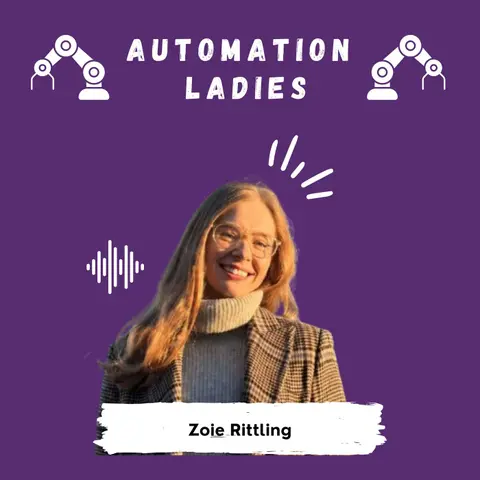
Edge computing sounds clean on a slide deck, but the factory floor is where the definition gets real fast. We talk with Zoie Rittling, an edge computing specialist at TEGUAR, about what “compute close to the data” actually means when you’re dealing with heat, dust, vibration, uptime pressure, and constant change. If you have ever wondered why a normal laptop dies on a production line, or what makes an industrial box PC, panel PC, or edge server the right fit for OT workloads, we break it down in plain language with concrete examples like machine vision and quality inspection.
From there, we shift into the human side of industrial automation: how consultative B2B hardware sales works when you cannot manufacture demand and budget cycles run the show. Zoie shares why cold outbound is really a relationship game, why patience pays dividends over nine to eighteen month deal cycles, and how trade shows succeed or fail based on the planning and the post-show follow-up. We also talk about building a collaborative inside sales culture that protects customer experience instead of letting reps compete over the same account.
We wrap by busting two expensive myths: industrial computers can be powerful, and edge AI does not automatically require a massive GPU. The goal is right-sizing hardware to the workload so performance is solid and ROI is real. Along the way we get into mentorship, imposter syndrome, and the value of being humble enough to ask questions, whether you are a new account executive or an engineer leaning on vendors and applications teams for expertise.
Subscribe for more conversations on industrial automation, edge computing, OT hardware, and the people who make it work, then share this episode with a coworker and leave a review with your biggest edge deployment lesson.
_________________________________________________________________
🎙 About Automation Ladies
Automation Ladies is an industrial automation podcast spotlighting the engineers, integrators, innovators, and leaders shaping the future of manufacturing.
__________________________________________________________________
🎤 Want to be a guest on the show?
https://www.automationladies.io/guests/intake/
__________________________________________________________________
👩🏭 Connect with the Hosts
Nikki Gonzales
Courtney Fernandez
Ali G
__________________________________________________________________
🎟 The Automation Ladies Community Conference: https://otscada.com
Learn more about the hosts’ industrial automation conference OT SCADA CON attended by 100+ automation professionals, engineers, integrators, and technology leaders for hands-on learning, real-world case studies, and meaningful industry connections.
🎬 Credits
Produced by: Veronica Espinoza
Music by: Sam Janes
P.S. - Help our podcast grow with ...
--------------------------------------------------
Want notifications of upcoming episodes & other Automation Ladies news right in your e-mailbox?
00:00 - Welcome And Edge Computing Defined
02:00 - From Oil Painting To Tech Sales
04:36 - Cold Outbound That Builds Trust
07:00 - Outbound Tactics And CRM Reality
10:40 - Trade Show Prep And Post-Show ROI
13:40 - Collaboration Inside A Competitive Team
15:20 - Hardware Myths And AI At Edge
19:12 - Authentic Selling And Teaching First
23:39 - Partner Ecosystems Make Hardware Useful
24:47 - Mentorship And Beating Imposter Syndrome
27:50 - Humility Rules For Enterprise Accounts
34:40 - Using App Engineers And Support Wisely
35:30 - Where To Connect And Wrap-Up
Welcome And Edge Computing Defined
SPEAKER_03Welcome to Automation Ladies, the only podcast we know of where girls talk about industrial automation.
SPEAKER_01Hello! We're live with another episode of Automation Ladies. Live pre-recorded. I don't know what we're gonna call that, but recording now.
SPEAKER_04Today we have uh Zoe Riddling. She works for Tegwire. Yeah, Teguire. You got it. Um, and she is an edge computing specialist. And uh before she explained her story and how she got here, I wanted her to just give a really quick background as to what edge computing is. Because I have a decent idea of what it is. Um but if you could just give the definition for any of us who don't know what is edge computing.
SPEAKER_00Happy to. All right, so edge computing is where you need to put a device that does processing. So a device with a CPU close to where data is being generated. Um, and typically that means that you're putting that device in an environment that is really unfriendly to your typical like consumer grade hardware. Um, so really good way to describe it is to just use a real real case example. Um, if you are on a potato chip manufacturing floor and you need to have computers next to your line gathering data like maybe temperature, gathering um data from cameras on what the chips look like, doing some quality and defect inspection. If you put a Dell laptop out on that floor, it's gonna last maybe six months, if that. It's really not designed to work and be reliable in that environment. So that's where you would use something like an edge computer, where it's designed to be reliable in really challenging environments. We do industrial edge computers, panel PCs, box PCs, and edge servers. And the way that I got
From Oil Painting To Tech Sales
SPEAKER_00to where I am today is kind of a winding path. So I grew up in Burlington, Vermont. Um, after high school, I decided I wanted to go to school for something that I knew I would enjoy, not necessarily something that was gonna make me a bunch of money. So I went to school for visual arts. And my major was oil painting. I used to do oil painting portraits. Um following that, I just kind of worked full-time in like sales and customer service and management jobs, um, and had always wanted to go back to school, but never really found the right time. So, fast forward to COVID happening, I got furloughed from my job and decided now is as good a time as any to go back to school. So I enrolled in online school for software development, um, continued doing that while working full-time, and then started to look for jobs in the technology sector. And so I got my foot in the door with the sales team at an edge computer company in Vermont called OnLogic, fully expecting to move over to their software team at my earliest opportunity. Um, and then I started there on the sales team, and within like four months, just fell in love with technology sales and decided that I wanted to stay in sales for my career. So um worked on their tech sales team at OnLogic, kind of pivoted into more of an outbound business development role there before making the jump to Teguar in October of 2025, where I lead the solutions team today. The solutions team is Teguar's inbound or inside sales team. We are often the first point of contact for a new customer engaging with Teguar. So our role is really to act in a consultative manner, become a trusted advisor, really understand what our customers' technical needs are, what's gonna make them successful with their hardware deployment, and then we connect them with the appropriate resources to make them successful. It's a really fun role. Um, all of our customers have very diverse and interesting and creative applications, and so no two days are the same, and I love the role that I'm
Cold Outbound That Builds Trust
SPEAKER_00in now.
SPEAKER_04So, um, what is the key to turning cold outbound to long-term customer relationships?
SPEAKER_00Ooh, yeah. Okay, well, with cold outbound, it's all about building a relationship to start. Like, okay, hardware is so different from software outbound sales because with software, you're really selling a solution. With hardware, you're really selling more of a platform. Uh, and you can't really create demand for hardware. Um, you're pretty uh, I would say, like at the mercy of people's like CapEx and OpEx expense cycles. So um, because of that, and because in hardware, the deal cycles are really like nine to eighteen months. It's a really, really long deal cycle to begin with. And that's like with an inbound lead, with outbound, it's just about building a relationship with people and like making friends. Um, so that when they do have a need, they remember, oh, I talked to someone who does this, and then they reach back out to you. And that has happened. That's like that pays dividends. It's just like building that relationship. Again, being consultative, not trying to be super pushy, but just being friendly and having integrity, being honest. Um, and yeah, it's just not trying to push anyone to anything because in reality, like I'm not gonna convince anyone's finance team to release this budget six months early just so I can make a sale. Like, I'm ultimately trying to be there to help people. Um, and so I think you can convey that when you build a relationship with them, and then just be patient and like keep putting the work in and putting the time in because it really does ramp over time.
SPEAKER_02You get repeat customers from engineers like me as well. A lot of times I'll end up, you know, suggesting we go to this vendor for something and they're like, What did they do? And I'm like, they left me alone.
SPEAKER_00Yeah.
SPEAKER_02Until I was ready.
SPEAKER_00Yeah, exactly. Yeah. Um, have either of you done outbound sales? No.
SPEAKER_04Uh, we do it with automation ladies and we suck at it.
SPEAKER_02I've done trade shows uh with companies before, which is a really uh that's a really big outbound lift. And um I wasn't, I'm like, I was more of the one of the sales engineers standing
Outbound Tactics And CRM Reality
SPEAKER_02in the booth trying to get people to like come in and look at solutions, but I've seen what goes into, I mean, just for like our own OT skatacon or looking at the spreadsheet for an exhibitor um going into a booth at a show, it's like the mega spreadsheet of death um that it takes to go into doing one. But yeah, I'm curious when you had to do uh outbound and you're jumping into a company that already exists, did you have like a CRM that you could tap into? Um, or like, you know, just kind of hit up like already existing customers for outbound, or did you just go like carpet bomb, you know, phone calls into a remote?
SPEAKER_00Yeah, yeah. Um, so let's see, at my previous role, uh the whole thing, like we did have a CRM, yes, but I wasn't allowed to pull contacts from that unless they hadn't purchased in a certain amount of time. So it was like, let's call it luke, lukewarm, luke, luke cold. Um, like maybe they purchased from us three years ago. And so, like, yeah, I'll reach out to them unprompted and um try to try to re-engage them. Um, but at my company now, uh, we have a really amazing marketing team and they do they they come up with so many inbound leads from us. Like, we have not had to like hit the gas fully on outbound. And so we're just kind of like dipping our toes into it, um, starting to use my my skill set to train up my team to ramp up more on outbound. Um, but yeah, primarily it's gonna be like trade shows, um using some like buying signals, social media, um, kind of a multi-thronged approach. Um, and then maybe some older CRM leads as well. So definitely a multifaceted approach.
SPEAKER_04Well, um what does it take personality-wise uh to be in sales?
SPEAKER_00I think it takes all types. Like, I think anyone can be in sales, you just have to figure out how to be yourself. I love that. It's kind of like like it this is a bad analogy, maybe, but like when I was in visual arts, um I would just put the time in, and people were like, How do you do that? uh or like how do you become good at art or drawing or painting or whatever? And like for me, it was just about patience and finding what I was interested in doing. Like, I really truly think that if you want to be good at art, you can be. You just have to be patient enough with yourself to do it. And kind of similar to sales, I think anyone, if you're interested enough, can be good at sales. You just have to figure out like what product you want to sell, something that you're interested in, and figure out how to be yourself. Um, and figure out like what's important to the people that you're selling to, and that has to matter to you and be important to you. Um I'm truly a proponent of like if you are interested in something and if something brings you joy, you're gonna be better at it than if something like than something you dread and hate. Um, and so now that I'm a manager, like I have a few direct reports on my team, that's something that I really take into consideration when we're training people up and developing them. Um is okay, so and so, we have a couple different paths that your career could take and that we could work on developing you into. What are you most interested in of these options, plethora of options? Like, what do you have the most fun doing? And then let's figure out how to make that
Trade Show Prep And Post-Show ROI
SPEAKER_00into a specialization for you. As long as that matches up with the needs of the business, then like I'm all for it. Thank you.
SPEAKER_04Yeah. Um, you talked about trade shows. Yeah. Um, what does your pre-preparation for a trade show look like on the exhibitor side?
SPEAKER_00Oh man, it's a lot. So um again, we have we're really lucky. I have a great marketing team. Um, they pull a lot of weight when it comes to trade show planning. Like they're months and months ahead of time um planning what we're gonna bring to the trade show from a like a product perspective, um, making sure that we have inventory that we can pull, right? That that inventory isn't super constrained and we should actually be sending it to actual customers and not to our booth at the trade show. Um, planning out the big thing for me this year was we had a couple partners in the booth. So we had uh Concept Reply running a robotic arm demo in our booth, and then we also had Vlad from Joel Tech in the booth. Uh, I'm not sure if he was at OT Skatecon, but um, we had both of them in the booth, and that on top of another demo we were doing took a lot of pre-planning and like logistics coordination. Um, so that definitely took up a bit of time. Um, and then also looking at the exhibitors. Um, who are our current customers, who are the customers we we don't have yet, but want to have. Um, and then from an attendee standpoint, who are the folks I've connected with the past three years that I've been at Automate or another trade show that I want to reconnect with this year? So it's like a lot of pre-show outreach, um, logistics and planning, and then also like the post-show is where everything really comes to life whenever you actually get ROI from the cost of a trade show. Yeah, that sounds hard.
SPEAKER_04Yeah. Um, I've only ever been on the walking the floor or yeah, just walking the floor. Well, Ocean. I've never had to be.
SPEAKER_00That counts. That must have been like a huge lift. How was it, by the way? I'm so sorry. Ocean Skatagon? Yeah, how was your week?
SPEAKER_04Um, yeah, that was hard. Yeah. Um we lost three of our really uh critical team members. Uh so we didn't know what we didn't know, and so it was um it was stressful, but we still delivered uh, I think a really fun OT Skatecon.
SPEAKER_00Yeah, it looked really awesome. Next year I've got to be a good one. I hope you become I know. Next year I really want to. I would love to explore sponsorship. I think I just like didn't get my ducks in a row this year in time for it, and then I ended up being on PTO the week that OT Skatecon happened, and so I was spending time with family for a reunion.
SPEAKER_04We're moving it to a week later. So it's gonna be the last week of July. So hopefully maybe you can make it to that.
SPEAKER_00Yes, I would love that. I'm I'm gonna plan on making it to that. Absolutely.
Collaboration Inside A Competitive Team
SPEAKER_04How do you foster collaborative culture in a competitive sales environment?
SPEAKER_00Ooh. Um, you know, honestly, I think just like setting expectations with folks right off the bat, like when they're new to Teguar, um like going over with them, like what expectations are, you know, if say a customer writes in to because I I manage a team that um responds to like website chats and the the phone, the phone calls that come into our main phone line. And like if you email sales at tagwar.com, you get our team. And so um, whenever a customer writes in, chats in, contacts us, uh, really the expectation is like make sure that they're not already working with someone here. And if they are, they should be passed off to that person because whoever that sales rep is has the most context and is going to be able to help them most effectively. Um, so really I think it's about like setting expectations, um, setting a good example. And so, like a lot of our training is shadowing. And so people are shadowing me and they're seeing like how I would deal with an incoming lead and making sure that um if that customer is already being helped, then we should connect them with who was helping them before. So um, yeah, and then also just stressing the importance of customer experience. Um, customers gonna feel that tension if you have sales different salespeople at the same organization kind of like fighting over them. Um, and so I think that's gonna be pretty transparent. Um, and so just making sure that the team stresses that customer experience is our top priority.
SPEAKER_04Great.
Hardware Myths And AI At Edge
SPEAKER_04What is a myth about B2B hardware sales that you want to bust?
SPEAKER_00Ooh, um, I think that people a big okay. I have I have two. One is that uh one I've heard is that industrial computers can't be powerful and so we can't use them. Not true, false. Um you can buy a super tiny little like entry-level gateway, um, if that's all you need, but you can go all the way up to like a super beefy, performant, um, like big industrial computer that has a wide temperature range. It's fanless, but you know, you can put a GPU in there and you can perform machine vision or AI workloads at the edge. Um, and so they're really they're built to order, they're super configurable, and you can make them as performant as you want them to be. And that kind of comes back to like our consultative approach, is like figuring out customer, what do you need out of this unit? Um, and how can we optimize the actual unit spec so that you're not overpaying for a bunch of bells and whistles that you don't need, um, but you're also getting something that's sufficient for what you actually do need. Um, so that comes back to the consultative piece there. Um, and then the second myth uh is kind of the other direction is you need a super beefy GPU to run AI at all times, no matter what. Um, and that is also not true. Um, so I have worked with folks running lightweight AI applications at the edge on like like an N150 or an Atom class CPU. And so uh really comes down to like the size of your model and the performance need of your model. Um, and then we can make a hardware recommendation based on that. But no, you don't need to throw uh like a super performant NVIDIA RTX Pro at every single application. Figure out how to right size your hardware because otherwise you're never gonna get ROI on some of the more lightweight applications, and then you're just gonna give up on implementation.
SPEAKER_02Like, what's the what like have you ever like closed on a naysayer that just made you super proud?
SPEAKER_00Oh, that's a good question. I mean, I feel like nothing comes to mind as far as like a naysayer go. Do you mean like like if someone really thinks like all industrial computers are too weak to run my application, or vice versa? Is that what you mean, Courtney?
SPEAKER_02Yeah, or the customers convinced that they need that rocket ship and you convince them that like you don't need a rocket ship, you can run it on this and save money.
SPEAKER_00Yeah, that happens pretty regularly. People will come in and they'll say, uh, like ignition is a big one. Um, we work with inductive automation, and so we have a lot of folks using ignition. Um, and ignitions can be pretty lightweight. Um, and so sometimes people will try to over spec that. Um, or folks will just come in, maybe they'll ask for a quote for like, give me an i9 or an i7, like CPU. Um, and then you dig a little bit deeper and you discover, oh, they're using like an eighth gen i3. Like they can get away with basically a seller on right now. And um, I hope that isn't too deep technical-wise, but um, yeah, and so it's about like asking the questions to get the information you need to make an appropriate recommendation. And sometimes that is way less one than the customer thinks they need. Um, so it really, really depends on the scenario. But yeah, that happens all the time. People will come in and self-serve on the website and like totally miss that we have this totally like this other product that's actually a perfect fit for them. So that's really what we're here to do is to to ask the right questions to catch that. Thank you. Yeah, of
Authentic Selling And Teaching First
SPEAKER_00course.
SPEAKER_04Um, what is the single best piece of sales advice you've ever received in your career?
SPEAKER_00I think it's be yourself. It's the one I just passed on again. Yeah. Um, I think that is where I have found success, is um, and really it goes back to to my point earlier about building relationships with people, is you have to be yourself in order to build a relationship with someone. And if you're a little bit weird, um and like not a robot and you are yourself if you're authentic, then um I think that that resonates with people better, and you're a little bit more memorable for that. You're not just another drown. Um, and so yeah, being yourself, it's gonna help you build relationships with people, and then you know, if you build a relationship with someone, they're gonna remember you down the road. What about you guys? Best piece of sales advice you've received.
SPEAKER_02Ooh, always be closing. A B C A B C But honestly the same. Just being being authentic gets you more, I think, credibility than trying to be perfect and present the thing as perfect. It's like I'm human with flaws, the product has flaws. Let's talk about the actual situation.
SPEAKER_04Yeah. Uh for me, my dad was the one who taught me that he was a sales guy, he did timeshare and then uh real estate. And he and and he was like really big into digital marketing. And um he told me that like people want something, uh, they don't want to just give you their email. And if you can teach them or like write a white paper or something, like you can get them to come back to you if you help them, and it's not necessarily um right away, so it's not like immediate return, but you teaching people uh will make them come back to you. And I've I've always remembered that. I I kind of use it as like my platform in terms of uh LinkedIn uh is trying to teach as much as I can because um and I've helped people like I one time like we were looking for a really good ignition programmer. I had a friend who needed help, um, and she was just like, please, like, can you help me? And I was like, I don't know how to do this, but um let me find out if I can shout out someone on LinkedIn by getting them to help me. And um I did. I I think it was Derek Chambers that ended up helping.
SPEAKER_00Awesome.
SPEAKER_04Um and uh she came back and gave me a project later. That's great. Yeah. And so that that happens like that.
SPEAKER_00Yeah, yeah, absolutely. Like deliver value in a way that isn't just self-serving. That's huge. Yeah. Uh, I actually did that same move, the LinkedIn shout-out, like, call, call for help, um, phone a friend today. Um, let's see, it was uh someone I met at Automate, and um they are trying to build an application for um like 3D sewing. So not taking like 2D pieces of fabric and sewing them together, but like putting them on a 3D mold and sewing them. And because it's fabric, like different types of fabric require different amounts of tension. So it's like robotic 3D AI machine vision sewing, which seems so challenging to me. Um, and I'm like, I mean, I can't, I'm not the software person, like I don't build AI applications, I don't build robotic applications, I just do the hardware that they all live on. Um, but let me shout out my network. And then like I've had like five responses already. So yeah, just trying to like help people without being self-serving can go a really long way.
SPEAKER_04Hell yeah.
SPEAKER_00And now I'm like totally invested in this 3D sewing application. Like I need to see this in person. I can't wait to see.
SPEAKER_02Are they using a cobot? What are they a gantry? How are they doing this? What is I I don't know.
SPEAKER_00I think they're still like experimenting with their options, but yeah, I think they were like between Fanic and Kookah last I knew. So that's where we're at right now. So I'm trying to find them a solution provider so that it can come to life. So that's a cool one.
Partner Ecosystems Make Hardware Useful
SPEAKER_02You find yourself partnering with solution providers a lot because like you guys offer the hardware, and like you said earlier, people want to buy like a full solution. So do you find like partnering up with a solutions provider and and working through them to get customers is definitely absolutely so uh we're you know, like I said, just the hardware.
SPEAKER_00And a computer is just like a fancy paperweight until you put something on it. Um, so for that reason, we started building out a partner ecosystem. Um, so like inductive automation is one of them. Um Sorba AI is one of them. I think Brian just spoke at OT Skatacon. He's awesome. Shows shout out to Sorba. Um, yeah, and so uh definitely is it brings a lot more value to our customer engagements for sure to have a partner in there because, like I said, like you a computer is just a computer until you tell tell it what to do. Um and so we're actively growing that partner ecosystem to kind of fit more of the customer niches that might come our way.
unknownYeah.
SPEAKER_00Excellent. Yeah.
Mentorship And Beating Imposter Syndrome
SPEAKER_04Um, can you talk about mentorship and you know, mentorship you received versus mentorship that um maybe you're participating in, mentoring others? Um let's talk about mentorship.
SPEAKER_00Yeah, for sure. Yeah, especially sales mentorship. Sales mentorship, absolutely. I mean, I've had a lot of mentors in the different industries I've worked in kind of throughout my career, um, specifically in this industry. My uh my prior employer back in 2022 had an official mentorship program, um, which I think is so huge for new hires. I had imposter syndrome big when I first started at that employer. Like I every day for the first month was like, should I just go back to my last job? Like, I don't belong here. And um, and then like three months later, I was loving it and I was crushing it, and I was so happy. And a big part of that was my onboarding mentor. Um, so they were in sales as well. They were actually they were the person who said, like, just be yourself. Um, they provided both like tactical and more like qualitative, like anecdotal sales advice to me, and they just made me feel welcome in the industry and like I had a buddy in the industry. Um, I think when you're joining a new community, it can feel super daunting, um, and like easy to feel like I don't belong, um, and I don't know enough to be here, and everyone's smarter than me. And having your buddy there, um, who basically validates that everyone goes through that, um, is it can make such a huge difference and just making you feel welcome and like that opens you up to to learning and and developing so much more um than if I just kind of sat in that imposter syndrome without without a friend along the way. Um and then kind of throughout my career, beyond that initial mentor, I kind of sought out my own as well, like figuring out who has and exhibits the sales techniques that I admire and that I want to be like, and how can I just spend more time around them and like really soak up what they do? Um, and so I was very proactive. I like even had a like an awkward conversation with them, like, hey, will you be my mentor? Um and it it's awkward, but like it worked, and I learned a ton from that person that now I am able to share with others. Um, and that's part of the reason why I am where I am now. So uh at my prior role, I was an individual contributor. Um, and then I got this role at Teguar to be a manager, and so I manage uh the inside sales team at Teguar. Um, and a big reason why I am where I am is because of the mentors that I've had in my past. Um, and now I get to be a mentor to everyone on my team. So yeah, full
Humility Rules For Enterprise Accounts
SPEAKER_00circle.
SPEAKER_04Um, what's one rule for new account executives for building enterprise relationships?
SPEAKER_00I think be humble and be curious. Um, I think it's inevitable in like a sales motion where you have enterprise accounts that there's gonna be churn, there's gonna be like account shuffling that happens. So if you're a seasoned account executive, at some point in your career, you're gonna be handed an enterprise account that maybe was already like handled at the company or you know, was a where it's a pre-existing customer. Um I think biggest thing there, and from what I've observed, and like full disclosure, I've never been an enterprise account executive, but um many of the folks that I'm friends with that I've made, like friendships I've made over my career are. Um, and the ones I see succeed are um just like humble and really focus on building their relationship and ask the right questions. Um, not just the right questions, but like are humble enough to ask like quote unquote dumb questions. So they're not scared of like making a fool of themselves or feeling like they have to walk in the room knowing everything. Um they're just themselves and they're not afraid to ask questions and be curious.
SPEAKER_04I totally agree with that. Not that I know what um new account executives do, but from the other side, on the engineering side, that's what I want is I want you to be humble. Uh, I want you to help me. Um and not just, you know, send me away when you don't have the right solution. I want you to find me someone to help me. Mm-hmm. Yeah. Yeah, absolutely. Um, and so you don't just say like, that's not my job, um, you always have some kind of answer, which is this is who you need to talk to next.
SPEAKER_00Yeah, yeah. Like if you are if you are someone who wants to say that's not my job and pass the book, we just don't get into sales. Um, you are that um if you need to rely on someone else internally or externally to get the job done, like that's on that's on you. Um, you have to really like be the owner of that relationship. Um, yeah. I think uh another thing is uh I saw this on LinkedIn the other day. If you show up with pastries, that never hurts either.
SPEAKER_02I forget to show up with that pink voice every time.
SPEAKER_04My favorite guy would show up with Kringle from Racine, Wisconsin. And that stuff is so good. And we were in Phoenix, so he was from Wisconsin and he would just have that stuff like I don't know if he just like there was dry ice in there or like how he kept it cold, but like they would ship that and like he would bring that in and it would just disappear. Yeah, like all the engineers would eat that, and like he was my valve guy. Yeah, and I what I really loved about him in sales was um his he had girls on the inside, and they would they would find me things that I that I wasn't gonna buy from them. Yeah, it was just things I needed. And they're like, Yeah, but you need it for our product, so you need this, right? And so I just I've like forged a really, really strong like uh relationship with them where I was like, I'm not gonna buy vows from anywhere else. I was a process engineer, yeah, and I was like, you guys have helped me so much um in teaching me and and giving me things that you're not you can't sell me. Um and they really invested in the relationship, and that made it just huge difference. And you can, as an engineer, find people out there like like Zoe who are going to spend uh that extra effort into getting you what you need, not just making sales.
SPEAKER_00Absolutely. If you can like anticipate what a customer is gonna need and like recommend it before they ask for it, that's huge. And then be able to tell them why you're like why you're proposing it and like build value around it. Um, that's huge. People remember that.
SPEAKER_04I had a sales guy that um was selling uh pneumatic equipment, and he came on to my plant and showed me all the pneumatic mistakes we made in plumbing, and I learned a lot. Um, and and he made so much sense. Um, he was just teaching me. Um, and so it just made it like, why would I get my stuff from anywhere else um than these people that are willing to teach? Right. Um and as an engineer, a new engineer, my recommendation is also to um use the the vendor for their knowledge. They have a lot of knowledge and they have applications people. Um, you may not have the right person right away, but they have people in their company that can help you, and you need to, you know, give them a chance and see if they can help you and learn from them and and don't be don't be too proud to tell them what you don't know because it's okay that that's how all of us young engineers start out, is we don't know anything.
unknownRight.
SPEAKER_04And we learn we learn from the vendors. I learned so much um about what I do about process engineering and controls engineering from the vendors. Yeah. Um, so I that's my shout out to the vendors that like care and the vendors that do they go the extra mile.
SPEAKER_00Yeah, yeah. I tell my new hires, like, and just me personally, like I we're the people that we talk to every day are engineers of all different, all different types. Um, and I enter every sales call. Like, I know I'm not gonna be the smartest person in the realm, but maybe I can teach you something about our product because I also don't expect you to be the subject matter expert on everything Teguar. And so I know that like uh you probably know a lot more than I do about engineering, but there's still something that I can teach you about Teguar and how we can help you and support you. So that's the approach I take. I love that. Yeah.
SPEAKER_02So one of the ones that are willing, like if you're stuck and you can tap an applications engineer, like I used to be more scared to do this, and now I almost start with it is going to the app engineer or the the salesperson and saying, Do you have uh like have you already done this application before? Do you have a sample set of something that I could start with? Do you have a snippet of code, even if it's not proprietary, just like something that does the motion or the the thing just as a starting point? And I've learned more, I think, from those than I have of going onto forums and like trying to research it online. So vendors already
Using App Engineers And Support Wisely
SPEAKER_02done it before.
SPEAKER_00For sure. Yeah, we have a small application application team. And um one of the the newer kids, he's like, he's a young, young kid, but he came he came from the data center world. So he's big into servers, but he's so sharp. And a couple times I a customer has reached out to me for support on like like getting a GPU to work or something like that. And I've just been like, all right, Thomas, customer, here you go. I'm gonna step out of the conversation now. So um yeah, I definitely rely, rely on them quite a bit. Um, they're awesome. So definitely don't shy away from that either. I mean, salespeople, again, we can we can know enough to be dangerous and never assume anyone's background or assume that they're able or unable to help you, but I'll do what I can to get you the help that you need. Great.
Where To Connect And Wrap-Up
SPEAKER_04Um, we are getting closer to the end of this uh podcast. Um, where can people find you if they want to meet you or connect with you?
SPEAKER_00Let's see. Uh LinkedIn. I'm always on LinkedIn, Zoe Rittling. Uh, you can go to our website, Taguar. You can write in there. You can call us anytime. Um, and then trade shows. Let's see. Coming up, I'm gonna be at ICC in Sacramento next. Teguar is there. Uh, that'll be it for exhibiting this year, but I'll probably go to IMTS as well. And then definitely automate next year. We will be there.
SPEAKER_04Great. What about pack expo?
SPEAKER_00Uh yes, I go to some of the pack expos, not all of them. Usually the one that's in Las Vegas, I go to. Okay. Yeah. And also OT Skatacon 2027.
SPEAKER_04Yay!
SPEAKER_00I will be there.
SPEAKER_04Well, thank you very much for coming on the podcast today.
SPEAKER_03Of course, thank you for having me. Thank you for listening to Automation Links. If you like our content and you want to stay, please connect the test on LinkedIn, follow the show page, subscribe to our YouTube channel, and you can send us a message or a copy on our website at automationleadings.io. We look forward to getting a note.