


 Apple Podcasts

 Spotify

 Amazon Music

 YouTube
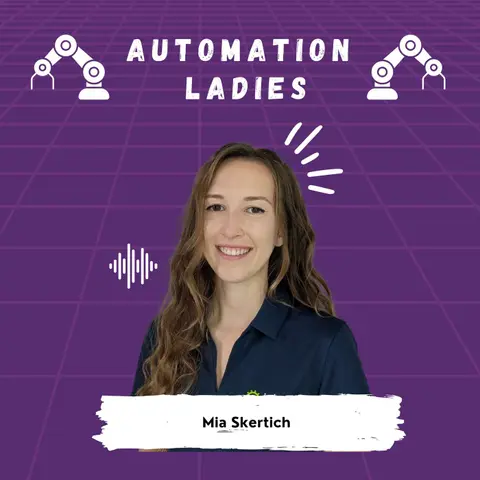

A lot of people think you need a perfect plan to get into industrial automation. Mia Skurdic proves the opposite. She started college unsure of her direction, discovered programming for the first time in an intro engineering rotation, and later landed in the Ignition ecosystem almost by accident, then never looked back.
We dig into what it’s really like to grow inside the manufacturing world as a computer science major: building MES solutions as a systems integrator, connecting Ignition to ERP systems, and learning why the database layer often carries the “real” business logic. Mia also gives a clear, practical breakdown of Perspective vs Vision and MES vs SCADA, including how OEE, traceability, and process orchestration change the conversation beyond simple real-time machine visibility.
Then we zoom out to the skills that make automation engineers dangerous in the best way: reading the manual, using the forums, learning by doing, and leaning on a community that actually shows up. We also talk AI as a lightweight troubleshooting partner, why vibe coding can make debugging harder, and the future trend Mia wants to see everywhere in OT: better software engineering practices like Git version control and repeatable deployments. We wrap with a reminder that you don’t have to be “a math genius” to build a great career, plus why Ignition Maker Edition is a legit way to learn through personal projects.
Subscribe for more conversations like this, share the episode with a friend in controls or software, and leave a review so more people can find Automation Ladies.
_________________________________________________________________
🎙 About Automation Ladies
Automation Ladies is an industrial automation podcast spotlighting the engineers, integrators, innovators, and leaders shaping the future of manufacturing.
__________________________________________________________________
🎤 Want to be a guest on the show?
https://www.automationladies.io/guests/intake/
__________________________________________________________________
👩🏭 Connect with the Hosts
Nikki Gonzales
Courtney Fernandez
Ali G
__________________________________________________________________
🎟 The Automation Ladies Community Conference: https://otscada.com
Learn more about the hosts’ industrial automation conference OT SCADA CON attended by 100+ automation professionals, engineers, integrators, and technology leaders for hands-on learning, real-world case studies, and meaningful industry connections.
🎬 Credits
Produced by: Veronica Espinoza
Music by: Sam Janes
P.S. - Help our podcast grow with ...
--------------------------------------------------
Want notifications of upcoming episodes & other Automation Ladies news right in your e-mailbox?
00:00 - Welcome And Meet Mia
00:40 - From College To First Ignition Role
03:17 - Choosing Computer Science Without A Plan
05:58 - Systems Integrator Life With Ignition
08:16 - Perspective Versus Vision Plus MES Versus SCADA
14:24 - Manuals Forums And Learning By Doing
19:28 - Why She Shares Ignition Tips
25:01 - AI As A Debugging Partner
35:34 - Git Version Control And Deployment Discipline
39:06 - Maker Edition Personal Projects And Goodbyes
45:59 - How To Stay Connected
Welcome And Meet Mia
SPEAKER_01Welcome to Automation Ladies, the only podcast we know of where girls talk about industrial automation. This episode is brought to you by Inductive Automation.
SPEAKER_00Hi, welcome to another episode of Automation Ladies. And I'm Ali Gilpin. And today we're going to be interviewing Mia from Inductive Automation. Welcome to the show, Mia. Thank you so much. Thank you so much for having me, and I'm so excited for today's episode. So we don't usually uh super plan out our episodes, but we we like to start by asking people how they came to the position they're in. Yeah, can you kind of tell us the that as a story?
SPEAKER_02Of
From College To First Ignition Role
SPEAKER_02course. So I would say uh my story began when I was in college. I was studying computer science in or at Purdue Northwest. And then uh when I graduated, I was job searching, applying to a wide range of places. And one of the ones that reached back out to me was Flexware. FlexWare stood out to me just because uh they they seemed to really embody their core values and uh seemed like they had a really good culture too. And when they gave me my first call interview, they mentioned ignition. They're like, have you ever heard of ignition? We have an ignition team, and I I was honest, I never heard of it before. I didn't apply for an ignition role there, I applied for something else. And they had mentioned that, well, Ignition has this free inductive university. If you're ever curious, you could watch videos and learn more about it. Um, so that was kind of the most that we talked about ignition. That first call, and after it was over, I looked it up and uh saw the videos and felt that they were really digestible. And it was nice too that you could actually download Ignition and use it while following along the videos because I'm someone that learns by doing the best. I mean, I could watch something and learn it too, but I really like to get my hands on it. So, regardless of if Flexware is gonna call me back or not, I was like, I'm gonna watch all these videos, and I feel like this is just a great tool to learn. There's no reason to say no to it. If I have the time, it's free. There's no no barriers for me there. And uh, by the time I reached my last interview at Flexware, I had already watched, I think, all the 8-1 credential videos at that time. And that kind of led to me joining the Ignition team at FlexSquare, and it's been ignition all since then, pretty much. So uh joined the team pretty early on, got involved in building manufacturing MES solutions using Ignition, uh, as well as had the amazing opportunity to facilitate some of the Ignition certification trainings, as well as their new trainings that they've uh recently introduced, and also trying to share what I've learned through LinkedIn, which has been a fun experience as well. And that has led me to where I'm at today. So uh spent five years in the integrator space and then joined Inductive a month ago, still using Ignition.
Choosing Computer Science Without A Plan
SPEAKER_00You you kind of started at computer science as your major. How did you pick that?
SPEAKER_02That's a funny question, just for me, because that it was hard for me to pick. I didn't know what I wanted to do when I first was uh you know going into college. I know I really liked math, um, mainly just because I liked the the systematic approach with it. Does that make sense? So um I wanted to do something with math. I I asked my one of my teachers, I really looked up to kind of what what options do I have? And it led me to starting off with mechanical engineering. And at Purdue, when you do an engineering major, one of your first semesters, if not second, you get a mini course of every type of engineering. So you do like electrical engineering for a couple weeks, and you ended up doing a programming class for a couple weeks as well. And when I had that class, I immediately fell in love with the programming side of things, and that made me immediately switch to a computer science major.
SPEAKER_00Did you study any programming languages while you were in high school?
SPEAKER_02No, no. So that's why uh it was kind of my first introduction to it. Uh, I think I did like a CAD class in high school, if I'm not mistaken, but no, no, uh, didn't program anything, didn't do it on the side or anything like that, no classes. So college was my first true introduction to it and getting to actually use it. So that's why maybe I had such an intense passion when I had that first class. It was brand new to me and super fun and amazed me with or gave me a bunch of ideas of all the things I could do with it.
SPEAKER_00In college, um, what was your favorite programming languages and why?
SPEAKER_02Oh, that's uh that's a hard question. Um, I would say in college it was Java just because that's that's the one that we spent the most time with and I felt the most comfortable with. We did touch on other languages. And you said that that's your your was your favorite in college.
SPEAKER_00Is that still your favorite?
SPEAKER_02Um, I mean, I don't have anything against Java. I think it's still very helpful and I like it. Uh, I did do very light module development with it and really enjoyed it. Um, but again, if I'm just going off of what I use the most, then I would probably say Python just because now I use that every day for ignition.
SPEAKER_00Okay, that makes sense. Um you started your career as a systems engineer. Um, what does that mean? Like what kind of systems?
SPEAKER_02So I
Systems Integrator Life With Ignition
SPEAKER_02I was a systems engineer and I was on the ignition team. So for me, that meant providing solutions using Ignition and integrating with any other systems that the customer needed at that time. So integrating with ERP solutions or warehouse management solutions or systems, but ultimately using Ignition every single time for those projects.
SPEAKER_00What's the biggest uh or most common, at least what you've done, um ERP system that you've had to interface with with ignition?
SPEAKER_02Oh gosh, that's a hard question. I think it's been different every time. I haven't had to deal with too many. I remember dealing with QAD. And there's some other ones. Yeah, yeah, SAP too. Um, but the reason why the names don't stick with me too much is it's more of we're just capturing any data from it, not actually like standing up the ERP system or anything like that, just connecting ignition to it. So uh thankfully, you know, ignition makes it so easy, even though it's different ERP systems, it's just getting that uh data communicated between the two and handling that data once you have it.
SPEAKER_00Um what is your favorite project um so far that you've had, like any work project that you really enjoyed?
SPEAKER_02I I don't want to get into customer specifics just because I don't know if I can or can't, but I honestly it it would be Spark. Uh so at Flexware, there's a Spark MES solution that I've spent pretty much my whole career there on. And it's one of my favorites just because I started when we were first making views and perspective for it, all the way to where it is now. Uh obviously I'm not with Flexware anymore working on it, but I've had so much growth with myself during that solution, as well as so much growth for that solution. So we kind of grew together, I feel like. And I just I take a lot of pride in how that solution became to be and uh what it's what it's doing for customers now.
Perspective Versus Vision Plus MES Versus SCADA
SPEAKER_00One of the questions I was gonna ask you was, and I don't know which one which question I should ask you first. So I wanted to know the difference between like perspective and and vision, like the products from ignition, but also um oh, the difference between MES and SCADA.
SPEAKER_02Okay. Um, just from a high level and starting with the first one. So uh I wasn't specific, but my career started with perspective. So I actually got introduced to Ignition perspective first, and I feel like a lot of people, um, their stories might be the opposite where they start with vision. And I would say the main difference is vision is it's also a visualization module, but it's feels similar to other solutions as far as how you would develop your screens and and the tools you use. Whereas Perspective is web-based and it's uh more responsive. It's it's kind of built with mobile devices in mind or like tablets or phones. Um, and I really like perspective because when I switch over to vision when you're doing those certification tests that are in vision, uh it's a different way of thinking. So I think it's just based off of which one you start with. But I'm like, I can't send a message. How am I gonna do this now? So uh that I that's like the biggest difference between the two, I would say, is if uh you're more familiar with other solutions, vision might be an easier point of entry, but I really like perspective. It's definitely one that I see really popular and used most often now. I haven't had a project and vision at all since I've started working with ignition. And then for MES versus SCADA, um I'm I'm not an expert in SCADA, I'll be honest. My like I said, my whole career, I was on the MES side. So we had an ignition team, but we had sub-teams that had focuses. So there was an MES focus group and a SCADA focused group. Um, from my understanding, though, I would say SCADA is more the live information of your machines, interacting with your machines, and being able to see in real time what decisions need to be made based off of uh what you're seeing on those values. And then for MES, um that there's an OEE portion of MES that we have. So you're still kind of looking at machine states and their outfeeds that kind of overlaps this with SCADA potentially. But uh the other part of MES is the traceability side of it and orchestration of your process, making sure that we're communicating with others, any other tools you're using or software you're using, putting that data in one common place and making sure that you're executing your process in the way that you want it to be executed in, whether that's a particular sequence or stopping when a certain value is beyond a set point, whatever it is.
SPEAKER_00Yeah, and in my experience, that's actually a really good answer. Um, thank you. It's it's um there's a lot more uh business related information in an MES. Yes. Uh, like work orders and and actually tracking the customers related to a work order versus just physically knowing what the equipment is doing. Yep. Um because you, I mean, the equipment of SCADA does not care about customers at all or work orders. Um that's not something that normally comes up when you're talking about creating a SCADA. Um, and I've read that like MES is almost a bridge between ERP and SCADA. Um, I know you can have an MES that does SCADA too. Um so you could build it if you already have like an ERP and you want to like bring in all this information, you could just use Ignition. Um but in other platforms, you know, ignit uh the the SCADA and MES are not the same platforms. Um so that's kind of cool that you can build in ignition, you can build a SCADA or an MES uh with ignition, uh perspective or or vision. Um uh but I guess maybe uh what I don't know about is the um the databases. Is that just built into both uh vision and perspective to have like a SQL database or or are there other database options?
SPEAKER_02In my experience, we specifically use Microsoft SQL Server, but Ignition lets you connect to different databases, whether it's Postgres, MySQL, whatever it is. Um we just kind of chose that as our standard when I was working with MES solutions. Um but yeah, that was a pivotal or not pivotal. That was the main part of my job was integrating with the database that drove our whole system. So even though we're building a solution using ignition, a lot of the business logic is getting handled on the database side.
SPEAKER_00And I'm sure I'm sure MES needs a database side just like SCADA does. Um and it probably can connect, you could probably connect MES's to SCADA if they don't already do both.
SPEAKER_02Um yeah, there's definitely I could see value in that because uh I see a lot of customers that, you know, they're integrated with an ERP that's telling them what orders they have to execute, and the MES knows that. But having the SCADA side information of which lines are having maintenance or currently have a down state would help you schedule those orders more efficiently.
SPEAKER_00What have you learned from working on both the implementation slash integration side and now
Manuals Forums And Learning By Doing
SPEAKER_00the platform side? I know you've only been doing it for two months, but is there anything that um just strikes you as like a difference, maybe just for um people that are coming into the industry and have never worked for like the OEM of software before or an OEM? Because I think of ignition or inductive automation as an OEM. They just their software is their product.
SPEAKER_02I I would say I don't have a great answer because for me, my my role really didn't, I mean, my role changed. I have a different role, but what I do did not change. So at Flexwork as an integrator, I was using Ignition to build solutions. And the role I took on inductive, I am using Ignition to build solutions. So I'm uh an application engineer, so that means I'm using Ignition to create the public demos that you see provided by inductive automation or creating additional exchange resources. There's a lot more uh other things that are part of my role, but main focus is I'm I'm still using Ignition. I'm not actually writing the code that drives Ignition.
SPEAKER_00In terms of learning ignition, because you have a like computer science background, how easy was that? Or hard. Or strange. Like what struck you as different about it?
SPEAKER_02Um I will say I think the industry was the hardest part to learn. So not necessarily ignition. I'm sorry, I know that's not your question, but but the industry was kind of overwhelming. It was something that I was never in before. Um, however, I'm I'm very thankful for the mentors I had because as I'm learning the industry, as I'm learning ignition, they were so helpful. And my biggest takeaways while learning ignition specifically is you really need to make that manual your best friend. It wasn't until I started actually reading through the manual instead of trying to guess what I think I should be doing, uh, that's when things started really clicking for me and I didn't struggle to do things as much. So the manual uh was a huge tool for me. Also, the forums and everything like that, if the manual didn't uh answer your question right away or you couldn't find what you needed in the manual. Uh besides that, uh my other biggest takeaway and what I try to tell others is just to try things. Um, when I was doing the ignition classes, you get a lot of questions of like, well, how do you know when to use a row or column container? Or how would how would this work? And my answer would always be, let's find out. Let's just do it and figure, see what happens. And that's I learned by doing right. So that that would be my way of figuring things out and knowing for next time what I need to do.
SPEAKER_00Do you have any other advice for people that are learning ignition today?
SPEAKER_02Outside of the manual, outside of just trying things. Um I mean, I I guess I kind of touched on it, but I really do recommend the certification classes. Uh, in order to teach those, I had to sit in on them. And every single one I sat in on, I learned something. Even if it was just something small and random, I've always learned something while sitting in on those classes. And I thought I was an ignition expert by the time I was sitting on those as our gold certified, and I'd still be learning something new. So if you're just learning ignition, I think you're gonna grab so many useful pieces of information while sitting in on that class. Uh, the other thing is to utilize the community that I guess I didn't mention it earlier, but that that was the other thing that really drove my passion with ignition and helped me learn is I mentioned mentors, but it was also the community and how uh willing people are to help you, even if you don't know them, which is crazy.
SPEAKER_00I agree with that. Um I I actually got some project work once because I went on LinkedIn and I said, Hey, I have a friend who needs uh ignition help. If you know how to help them, and it was actually someone from FlexWare. Um I I said, if you know how to use ignition, and I will like basically shout out your abilities in return for help on this ignition problem or whatever that she had. I had this uh engineering friend of mine, and um yeah, like I got work from it just from you know showcasing his work. Uh she brought me work later, um, which was really cool. But um I'm I am familiar with Flexware um because of this one uh guy. Um I see that you um and actually I had learned about you before this interview because someone said that you post really good tips about ignition or using ignition.
Why She Shares Ignition Tips
SPEAKER_00What um why did you start doing that? What made you um post those tips?
SPEAKER_02Yeah, um I I always kind of wanted to give back to the community in some way, but I never knew how to. And actually, those posts are kudos to Flexware. So Flexware was looking for one of their engineers to be more active in the ignition community. And my manager had asked me to be that engineer, and so that led to me uh doing those LinkedIn posts. I try and do them every two weeks. Um, and I've been doing that ever since. So I've really enjoyed it. I pull a lot of my content just from those trainings I would be doing because that's when it clicked with me that some things I would say that are like so second nature to me, so I would see someone grab their notebook and write that down, like, oh, that's so good. I never heard of that. And so that's when I realized, like, oh, that you know, like I totally forgot if I put myself in their shoes, like, yeah, that was amazing, an amazing tip for me. And that's why I'm still using it today. So uh every time I come across something that I I feel like uh is something I have to write down or something that is integrated into my daily development and ignition, I try to share that.
SPEAKER_00Um, is there anything that has surprised you about working for inductive automation so far?
SPEAKER_02I feel like I'm gonna answer the opposite of the question because I uh it didn't surprise me, but I feel like it's it's so great to say. Um, the reason why, or part of the reason why I wanted to go to inductive is I've always seen the community and how supportive they are. And it's just filled with great people too, like just who they are as people, they're all great. And then on the inductive side, like going to the conferences and seeing how passionate and innovative the people are on stage about what they're talking about. I've always thought you can't fake that, you know, you have to embody that as a company in order to uh organically build that community and and create a product that that is truly innovative and and is filled with passion. And so when I actually came to Inductive, I I was expecting it to be the same on the inside. And uh thankfully I wasn't surprised because it is exactly how I expected it to be, um, which was great to see and just told me that or And still die made the correct decision by coming here.
SPEAKER_00Were you part of while you were with Flexware um part of uh the indict uh inductive community conference or ignition community conference?
SPEAKER_02Yes. I went to two. I went to the last one that was in Folsom, and then the first one that was in Oh, I can't think of the town right now. Sacramento? Yes, yep. So I forget what years those were, but it was definitely the 8-3 keynote. And yeah, the one after that. So I went to two. I wanted to go this year, but I made the mistake of planning a vacation the same week. So never do that, never to do that again.
SPEAKER_00But ignition or inductive automation has been extremely uh supportive of automation, ladies, and um of our uh commun our community conference called OT Skatecon. Um they have uh sponsored it since the beginning, uh which was three years ago. And um yeah, and I think right now they're a sponsor of the podcast, so which is really cool. Yeah. Um, so we we love um ignition and inductive automation, but I actually uh started learning Ignition when I was a controls engineer for my first uh um systems integrator that I ever worked for, uh, which is kind of like you, you're working for Flexware, which is an integrator. Um but I think Flexware has like extra uh uh capabilities because they hire these computer science majors and software engineers that know how to do more than just uh you know programming. What do you call that? Like, because when you learned ignition, it must have been it weird to see all the objects, right? Like it's it's so visual versus like structured text type programming. So that must have been the weirdest part of it.
SPEAKER_02It it was different, but it was so nice because it's like, oh, I don't have to spend time typing out what a button is, I just get to drag it. Now I get to code the cool stuff the button does and focus on that. So it was different, but I was totally fine with it.
SPEAKER_00Yeah, yeah, I think um it's harder because I was I remember when I was learning, like I think maybe Wonderware or something, but we we had to do Python scripting, and I do remember it not being that bad because it was Python. Um, but I was I've never been like wanting to learn like C or just truly like textual based languages, um, even though that I did start with HTML, my first experience um with text-based stuff, but um so you can't have an interview these days without somebody talking about AI.
AI As A Debugging Partner
SPEAKER_00That is true. So so what how is it affecting you now, and what do you think it's going to do later?
SPEAKER_02For me, um, just in my day-to-day, it's mainly just uh it's what do we call it? The rubber duck. I always say office cat, but uh it's something that you could talk to and kind of troubleshoot problems with. That's my biggest thing for using it. I know people are way more advanced and will, you know, create a whole proof of concept using AI, but uh I use it in a pretty lightweight capacity right now. However, um as far as like the MES realm, like I could see that being really helpful. It's probably already being used in this capacity. I just didn't get the chance personally, but I could see it helping uh operators have a better understanding of what's going on. Like an MES is going to enforce your process and tell you not to move on because your part's nonconforming and you can't move on until you fix this. But how do you fix it? Why did that happen? And so I think AI can help more with giving more context to operators and also be more predictive. So, you know, instead of having that non-conforming part on step 10, step eight actually lets you know this isn't trending in a good place. Like you should do this extra test now to make sure before wasting another hour on this part. So I I think that would be really cool. I that's the one thing I've always seen that uh as we provide solutions, operators could use more, um, which I I totally agree. I'd want that too if I was using an MES solution as an end user. And I think that would be a great start.
SPEAKER_00Switching gears, um, I saw that you were a lead. Um, what is that like when you have to, if not have to, when you get to help other people?
SPEAKER_02I I really liked it. That was part of the reason I wanted to become a lead. I love uh mentoring others because I just always want to return the favor for those that have mentored me. I'm so thankful for the people that taught me and how much I learned from them. And I'm so thankful of the career I've had because of those people. And so uh getting to return that favor, hopefully, hopefully I'm doing that good of a job, uh, means a lot to me. That's why I really liked the trainings as well. Um, getting to be a team lead lets you work, you know, with your internal team. Doing the trainings lets you help people in the community. So uh I did really appreciate that part of the role.
SPEAKER_00Have you tried vibe coding anything yet?
SPEAKER_02Not really. I I did my my boyfriend has a a small company, and so I helped him automate some stuff and used AI to help a little bit, but I never kind of let AI just fully run with it. I I I don't know if I'm the same way, I haven't bull freak. Yeah, I just I need to know how it's working and why. And so if I vibe code, I feel like I don't get that, but I could be wrong. I haven't tried it.
SPEAKER_00No, I think that's right. Like it's it's meant so that if you don't know how and how to do anything with software uh engineering, you can just tell it what you want it to do. Um, and so it's supposed to like decrease the barrier for entry, but not really because you don't know if what you built really works. If you don't understand how it works to begin with.
SPEAKER_02I feel like even if you do know that stuff, the hardest part is troubleshooting. So it's not building, it's troubleshooting. So you're making troubleshooting 10 times harder for you potentially if you know you're building something you don't know how it's built.
SPEAKER_00I think that's why people like Python, right? Because you can troubleshoot line by line versus like the entire thing. Like, I don't know, I troubleshooting C sounds harder.
SPEAKER_02I see what you yeah, there's so many other places the error could have stemmed from where, like, at least for ignition, if you're working with a Python script, it's gonna be within that script transform or scripting library typically.
SPEAKER_00Do you recommend that um people that study computer science like come into industrial automation? Or what what do you have to say on that front, like representing your major group? That is a good question.
SPEAKER_02I never thought of that. Um I I would say kind of how I talk to customers when telling them what to go with. Like, I just want to give you the information, you make the best decision for you. Uh, I've really liked this space because for me, it's been uh at least as an integrator, every project's different. I was on the ignition team and I I mentioned ignition was the core of every solution. Yeah, every project was different because every customer is different. You'd be working on uh or helping with the manufacturing line for one project. Uh, maybe they're building skateboards or wagons, whatever it is. And then the next week you're working for a recipe. I got to do like a it was internal, but like a brewery system. And I made a brewery system. So, you know, you go from manufacturing to recipes to you know, big named clients, which is always interesting as well. So um I like that because it kept thing, it's even though you're becoming an expert in the tools you're using, you're staying sharp or getting new problems to solve just by uh the customer and the new kind of process they have and the problems you got to solve with that. And getting to learn about things more too is always interesting. Like, oh, I didn't know that they had to do that when they manufacture planes or whatever it is. So if that's something that interests you, that could be a great uh avenue for you. Um, for me, it felt also just very high-paced too. I mean, as an integrator, you're working on multiple projects at once. There's sometimes feels like there's absolutely no downtime. So if if you kind of like that uh context switching and always having something to do, it's helpful for that as well.
SPEAKER_00My last question is how strong do you feel with math? And do you have anything to say to people that maybe are not super strong in math? Should they still pursue computer science?
SPEAKER_02That's a great question. I would say, without even answering how good I am at math right now, because I don't want to admit that I have to pull up a calculator for simple math nowadays. Um the reason I said before, laughing. Uh I brought up earlier that I liked math and it kind of was part of my decision making of what I want to study, but it wasn't because, you know, I really I loved, I thought I was really good at math and wanted to do calculus every day. I just like the approach you have to take with math. I like the problem solving that you do and how it's very systematic. It feels linear when you're kind of solving a problem. Yeah, you know, you first got to do the multiplication or solve for X first, whatever it is, you go line by line. And so I think for some reason, coding is just very similar to that for me. Um, you're solving problems in a very methodical way, even though it's always different. You have the same methodologies that you're following and you're going line by line. Sometimes you're typing out that code and you're just you're going through everything in a systematic way. And so as long as you like that kind of flow, then I think that uh coding is for you. It's not that you have to be great at math. Like I said, I I still use a calculator for basic math. I it's just easier at this point. I don't really do equations too much anymore. Um, so I'm probably way worse at math than when I started.
SPEAKER_00But uh I'm exactly like you, and I'm so I wanted to bring that up because I'm a chemical engineer by education, and so that sounds like really mathy, but it, you know, it is and it isn't, and I did not need to do differential equations to proceed in uh producing these systems in the real world. Um, and so I kind of just wanted to see what what you thought about that, but I'm totally in alignment with you that um you don't need to be amazing. So if you're not the best at math in your class, that's not gonna stop your career at all. It's not gonna it's not gonna change anything. Um and I think people are afraid of that, um, or they see maybe others that are because there's people that are geniuses and they can do like crazy math in their head, but you don't need to do that because a computer does it.
SPEAKER_02Yep, exactly. Yeah, you can write the program that does the math for you.
SPEAKER_00Uh yeah. And so I just want people out there to kind of like see these jobs as like graspable things, graspable objects. Um, they're not impossible feats. Um and you and you don't have to be uh a genius to enter the industry. Um and you can still learn a ton, like basically through troubleshooting and failing, doing things wrong. Um, and you know, I I did that mostly in the physical world um while you did it in you know software, but I also messed up all kinds of crap in software. Um and it works, it works the same way. It's just like that's how you get better at doing it. That's why I don't think AI is really going to um take your or my job away. Um, because someone still needs to make sure that like it's actually doing what it's supposed to be doing. Um and you can't just do that if you only a vibecoder. Um, um has the uh the customers you work with, like who's your customer now? Is
Git Version Control And Deployment Discipline
SPEAKER_00it still end users or is it other groups in ignition or like how who are your customers versus like the end user when you were a systems integrator?
SPEAKER_02I it feels the same. I could be wrong, so I don't want to say the same half wrongly, but I I do feel like it is the same, you know. Inductive is just uh working with people who want to use their software, and so that's that's gonna be their customers. It's just um more of educating them on what the platform does and having them interested in purchasing a license and feeling confident in buying a license, and then uh the work of actually implementing that solution could either be on the customer if they want to use their own internal team or hire an integrator. So that I think uh the same people, they're just going to uh the integrator versus inductive for different things.
SPEAKER_00Did did Flex where have you learn any other um MES or SCADA platforms?
SPEAKER_02I haven't been here that long. I've actually only been here for a month and I lost a week because I was on vacation during ICC. Um but yeah, no, no MES or SCADA software is that I've I've learned yet, mainly just uh did the orientation. Um I did I have really enjoyed though. I've been getting to use version control and git more during ignition development while I'm here, which is uh something I've been wanting to get more into. So that's been great learning so far and getting to focus on that.
SPEAKER_00What do you see as the future? Um, just any particular uh future trends that you uh see coming besides AI, or maybe AI isn't.
SPEAKER_02I mean, maybe a trend that I would hope for is just more, more and more maturity of software engineering practices in our space, uh, you know, specifically those using ignition. Like I said, it wasn't until I joined Inductive that I really got to focus on version control and utilize Git. Um with 8.3, there's uh you know better version control and uh better ways to repeat deployments using the deployment modes. So I would like to see as time goes on, more people going to 8.3 using those tools and getting more and more comfortable with it. Cause I I just I really believe in those practices. I see a lot of value in those practices. And I think as more people use them, they'll see why. Um, there's nothing worse than pushing to prod and forgetting to push something and realizing too late, or you know, accidentally deleting or overriding someone's work. And since you didn't have it version controlled, it's gone forever and they have to redo it. So having those practices definitely uh gets rid of a lot of the headaches and stress that can happen with development. Okay.
SPEAKER_00Um I think you should you should feel like good that your first experience with like MES is ignition because they are the best.
unknownYeah.
SPEAKER_02I am very happy for the path I've been on.
SPEAKER_00Um, but yeah, that's um it's been great talking to you. Um
Maker Edition Personal Projects And Goodbyes
SPEAKER_00if people want to um communicate with you, uh, what's the best way for them to reach out?
SPEAKER_02Yeah, I would definitely say LinkedIn. My name's Mya Skurdic. And uh again, I have those regular posts. So even if you don't want to talk to me but just want to see what see what uh I could share ignition-wise, that's a great way. Or you could message me on there as well.
SPEAKER_00Are you gonna continue to uh post you know ignition tips for people?
SPEAKER_02Yes. I I don't know how many more tips I have, but I'm gonna try to do it as long as I can.
SPEAKER_00Um I think that's really good for your own brand, for yourself, not just ignition, which ignition is amazing, but it's just it's really good for you too.
SPEAKER_02Well, and I was gonna say, you know, I I joke, maybe I won't have enough content or enough to post about, but really like there's always so much to learn. There's so much to learn with ignition, so much to learn with other tools. And so um, you know, I feel like as long as I'm using things that encourage me to keep learning, I'll still have that. And I'm I'm thankful for those kind of tools that do give that to me.
SPEAKER_00Yeah, um, from my experience, Ignition does with one software what other companies do with more than four um different softwares to do the same thing. Uh so I always liked Ignition because of the training classes, inductive university, yeah. Uh, or was just I was like, wow, this is amazing, like a learning management system. So they just built the best LMS a long time ago, because this was over 10 years ago where I first even saw Ignition at all. And it was just uh a joy to learn versus just reading the like how-to's from manuals from everywhere else, they didn't create quite as as good of and and I think videos helped um maybe the technology kind of that was available um at the time, but yeah, learning from inductive university is something that I think all controls people should do. But it sounds like even you know, if you're trying to get into maybe the industrial space from a computer science side, uh that's another way to just come in and and to think it's easy and enjoy it.
unknownYeah.
SPEAKER_00Yeah, it doesn't have a huge learning curve. And I judge that because I am not a computer person, even though I'm a controls engineer. Um, I've blown up virtual machines because I wasn't taking care of like memory, and I just wanted every software on there, right? I wanted like the ultimate like tool, and I just blew up virtual machines. Um, and you know, I had to learn how these you know servers were set up and just a lot of computer crap that I really didn't care about and I didn't want to know. And actually, um when I first because I'm I'm a chemical engineer by education, so IP address, nope. Um, that wasn't something that was just like uh where how do you set that in your computer? Like, I don't know, I don't care. Um, and I so I learned like so many just bas IT server management, um, networking of devices just from uh suffering through these pro these these softwares that I had to use. You know, I I have to use certain softwares to communicate with certain PLCs um and certain uh HMIs and or whatever SCADA. And so uh that was kind of like it's really hard uh coming from a super physical, like this this is how you size heat exchangers or piping or pumps and valves and you know physical systems, and then to go into this like super computer-based stuff, just it was uh it was it was hard, but ignition and inductive automation makes it easier.
SPEAKER_02They really do. They give you so many ways to learn. And going back on what you said, like recommending the university for people wanting to get into space. I would say, even if you don't want to get into the space from a career side, like if you're just someone who tinkers on the side and likes to create things, I've seen so many people create amazing tools using the maker edition of Ignition. Oh, yeah. One of my friends built a plant app that uh she has all her plants on it and it texts her when to water her plants, uh, gives her all her stats. She has so many funny things tied into it. And then, you know, just doing their home management. I know. So uh I would even recommend it just if you're interested in having control on your own like personal projects. Uh Ignition Maker Edition might be helpful as well.
SPEAKER_00Yeah, uh, for people that don't know, uh Maker Edition is free, right? Correct.
SPEAKER_02Yes, it is a free version. Uh you just can't use it for production, but again, if you're using it for a personal sense, then it's a lightweight version of Ignition that you could use for free.
SPEAKER_00Which you absolutely should try if you uh are trying to get into automating anything. Yes, yes, I completely agree.
SPEAKER_02Yeah, they they make it easier.
SPEAKER_00Yeah. Um, inductive automation is a highly community-centric company um that just cares a lot about people, uh, the people that need to learn what they need to learn, and just helping helping like non-profits and other, you know, that's why they made Maker edition, um, was to help these people just get better at learning um how to use their product, which is far superior from uh anything else I've used. Uh and uh which I I won't name the names, but like we all know the other SCADA systems out there, and they don't there's a reason why ignition and inductive automation holds its place in the industry. Um so it's uh a very good career move to go work for you know inductive automation. But uh they're also lucky to they're also lucky to have you because you come from a really good uh you know systems integrator. Um and yeah, um, so thank you very much. Uh it's been a great episode uh talking to you.
SPEAKER_02Yeah, it's great talking to you too. Thank you so much for today.
SPEAKER_01Thank
How To Stay Connected
SPEAKER_01you for listening to Automation Ladies. If you like our content and you want to stay in touch, please connect with us on LinkedIn, follow the show page, subscribe to our YouTube channel, and you can send us a message or a copy on our website, automationladies.io. We look forward to getting to know you.