


 Apple Podcasts
 Spotify
 Amazon Music
 YouTube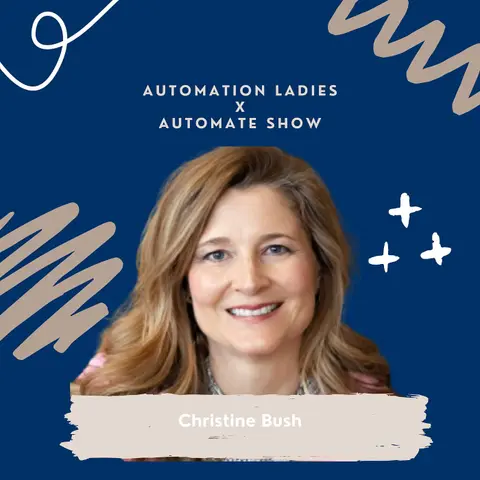
ROI math can be brutally simple, and that’s exactly why it often fails in industrial automation. If your spreadsheet only asks “how many heads are we replacing,” you might get a clean payback number, but you also risk approving the wrong projects and rejecting the right ones. We’re joined by Christine Busch, who leads Schneider Electric’s Robotic Center of Excellence, to talk about what return on investment should look like when you’re trying to make robotics deployments truly successful.
We dig into the payback expectations Christine sees most often, typically 18 to 24 months, and why finance teams still push for 12. Then we widen the lens to the costs and constraints plants routinely overlook: turnover in high-churn roles, recruiting and training spend, performance instability, and the cultural damage that happens when automation is framed as “replacing humans.” Christine argues that many of the best robotics wins come from automating the dirty, dull, and dangerous work no one wants to keep, then empowering operators to run the line better through upskilling and clearer ownership.
From there, we introduce a practical way to rethink the business case with what Christine calls a plant vitality index: reliability, downtime, maintenance burden, aging equipment and spare parts risk, KPIs like OEE, digital transformation readiness, and how well you use data for productivity, energy management, and sustainability goals. We also get real about cobots, why the space is more mature now, and why safety depends on whether the application is actually collaborative. To wrap, we touch on Schneider’s bigger vision, including software-defined automation, EcoStruxure Automation Expert, and the Universal Automation ecosystem.
Subscribe for more conversations on industrial automation and robotics, share this with a teammate building ROI cases, and leave a review if you want more practical frameworks like this.
_________________________________________________________________
🎙 About Automation Ladies
Automation Ladies is an industrial automation podcast spotlighting the engineers, integrators, innovators, and leaders shaping the future of manufacturing.
__________________________________________________________________
🎤 Want to be a guest on the show?
https://www.automationladies.io/guests/intake/
__________________________________________________________________
👩🏭 Connect with the Hosts
Nikki Gonzales: https://linkedin.com/in/nikki-gonzales
Courtney Fernandez: https://linkedin.com/in/courtneydfernandez
Ali G: https://linkedin.com/in/alicia-gilpin-ali-g-process-controls-engineering
__________________________________________________________________
🎟 The Automation Ladies Community Conference: https://otscada.com
Learn more about the hosts’ industrial automation conference OT SCADA CON attended by 100+ automation professionals, engineers, integrators, and technology leaders for hands-on learning, real-world case studies, and meaningful industry connections.
🎬 Credits
Produced by: Veronica Espinoza
Music by: Sam Janes
...
--------------------------------------------------
Want notifications of upcoming episodes & other Automation Ladies news right in your e-mailbox?
00:00 - Meet Schneider’s Robotics Leader
02:10 - Why ROI Is The Real Debate
05:25 - The Hidden Costs Behind Labor Savings
10:05 - Plant Vitality And A New Scorecard
15:50 - Cobots: Maturity, Myths, And Safety
20:55 - Software-Defined Automation And What’s Next
23:20 - Where To Connect And Closing
Meet Schneider’s Robotics Leader
SPEAKER_01
Welcome to Automation Ladies, the only podcast we know of where girls talk about industrial automation. Welcome to another episode in the miniseries, the automate miniseries of Automation Ladies. This one is, again, I'm pretty excited for all these episodes, to be honest. But today we have Christine Busch with Schneider Electric with us. And I was just asking her earlier, I had met a couple people from that team, robotics at Schneider, which I did not know until Allie and I went to TracerouteCon a couple of years ago and met a couple of lady members of the robotics team at Schneider, in fact. And so it's kind of been one of those things that like I knew about, but I haven't heard andor talked to a lot of people or seen a lot of those applications. And then I noticed Christine on the speaker list at Automate this year. And I thought, I would love to hear what she's going to be talking about. I'm not going to be able to attend the session. So that's what this is for. Christine, welcome. Thank you for joining us. Thank you for having me. I certainly appreciate it. Absolutely. So can you tell us, tell the audience a little bit about who you are and what you do at Schneider?
SPEAKER_00
Yeah, so Christine Busch, I have been with Schneider Electric for 20 years. So I've held many positions within the organization, but automation is near and dear to my heart. Before I came into the organization, I always say, if you cut me, I bleed ones and zeros because I love discrete logic and discrete manufacturing. But today I'm leading the Robotic Center of Excellence. So I have a team of business development managers that are out in the field working with customers to understand what their automation and robotic needs are. And then I have a team of application engineers that assist the business developers, but more importantly, supporting our customers trying to ascertain what their need really, really is and to be efficient with meeting their overall goals for installing high levels of automation as well as robotics.
SPEAKER_01
Okay. And so can you tell us uh what your talk is going to be about that you have it automate and kind of consider this, give a little synopsis to those that are gonna
Why ROI Is The Real Debate
SPEAKER_01
uh uh if they're not gonna be able to make the talk, uh probably come out after automate. Um, because just scheduling-wise, we couldn't get them all done before the show. But you know, automate is one of those things that like yes, it's once a year, but I mean, I don't know about your world, but in my world, we plan for automate pretty much all year. Like it's it's one of our biggest shows. So to me, it's like, okay, yeah, we're gonna keep talking about automate after automate for next year, right? So uh if you don't catch Christine, if you didn't catch Christine's talk uh this year, then I'm sure there will be more robotics content from Schneider at Automate next year. Um but yeah, this is kind of like you can tell me and the audience what we missed since we didn't get a chance to catch your talk.
SPEAKER_00
Okay. Well, when they first came to me about an idea to speak, of course, it was like, are you gonna talk about motion and robotics? And I'm like, yeah, I could. But because the show is filled with automation and robotics, I thought one of uh an interesting take would be return on investment. And I think from vendors that sell automation and robotic equipment to OEMs that build machines, to the end users that install uh the these pieces of equipment and on technology in their facilities, what is a return on investment? And how do we make automation successful? Because it's it's always a topic when I get together with my peers, either internally or externally, with the associations that I'm part of. It's are we making end users successful with deploying automation? Yeah. And how do we help them get there with deploying, having a successful implementation and more importantly, showing the value? That is what I'm going to be talking about. And I'm going to be talking about it from a simple fashion, which typically, if you look at return on investment, what am I replacing? Am I replacing old equipment with new equipment? Um, am I replacing headcount? Um, am I more efficient with my system? Am I going to have more throughput with my system? Then they determine how much they're going to spend on either the machine, the system's integration for applying it on the plant floor. And then they do again that that simple return on investment. But there are so many things that are overlooked that make the return on investment unappealing. And so I hear from end users, it's very hard to create that return on investment so that the financial teams are saying, yes, we need to do this.
SPEAKER_01
Yeah. And so uh, and what what is that return on investment that they're typically looking for in terms of is it years now? Like what is there, is there sort of an average acceptable uh ROI figure that the the finance teams you know are gonna say yes to?
SPEAKER_00
Yeah. Right now I I see um a common period of time being 18 to 24 months, depending on um what level of automation is going into
The Hidden Costs Behind Labor Savings
SPEAKER_00
the plant. Um, of course, finance is always gonna push you. I want to return on investment in 12 months. Yeah, sometimes that's not feasible, but I think maybe future wise, yeah, you know, you'll hear about in my presentation. Are we overlooking things that may be able to accelerate that return on investment to potentially that 12 months that a financial person is gonna want to see? Um, but again, we can't look at it from the the simple return on investment calculator that that most finance organizations use.
SPEAKER_01
Yeah, which is kind of like what, how many headcounts, or like what are we replacing? Isn't isn't that kind of the basic one?
SPEAKER_00
That the basic one is we're gonna replace headcount and and this is how much money I'm gonna spend. And then the simple calc is how many months am I gonna recuperate that based on replacing employees.
SPEAKER_01
Yeah, which I've always hated as a way to look at this because I feel like you're if you're looking at it that simply, um like you're really not, you're not even looking to grow your business, you're just like, okay, we just want to save money. Um obviously is is you you want to do that. Like automation should be there to make you more cost competitive, but yes, I think not just cost competitive, but competitive. So in my mind, it's always been okay, not just are we replacing an operator, but like what are you upskilling that operator to rather than replacing them? How much more capacity are you gonna get? How many more orders because you have a better product or a better elite time or or whatever, right? So yeah, what are um can you tell us what are some of these things that you are now pointing out to uh people in the audience that they should be taking into account in their ROI calculations?
SPEAKER_00
Yeah, I I I'm bringing to the table um and and and I I think it's a new spin on return on investment, but I I think either if you're a machine builder and end user, and I'll I'll stay in the end user space. Um what's your plant vitality? Okay, and and who are you communicating to to be part of the team to evaluate adding high levels of automation or robotics? Where's your buy-in inside your organization? Is it just engineering and finance? And I I I think a lot of times it's just engineering and finance. And the the negative connotation that comes out of it, and this is why robotics has such a uh uh again, a negative connotation is we're gonna replace humans with robots. Right. And that's just not the case. It is one piece of it, but the piece that gets overlooked is where we're adding high levels of automation, is where no one wants to do the job in the first place. It's probably the position in your organization that has the highest turnover. And so you're putting a lot of investment into an employee only within a nine to 12 month period for that person to say, this job is not for me. It's too repetitive, it's boring, it's dirty, it could be dangerous, the three D's that we all talk about in robotics. And then that valuable resource walks out the door and and goes to a competitor into a completely different industry. And so we're not empowering the employees. We've heard you, we've listened to you, we know we need to automate that job, and we need to empower you into X, Y, and Z. Yeah, I so completely agree with that.
SPEAKER_01
Now, when you look at that from an ROI standpoint, then the labor calculation becomes not. I mean, yeah, you you probably are replacing the head count, like the the the salary of that person doing that particular job, right? So you still kind of look at that uh as a number. Yeah. And are people, yeah, are are people rolling in the cost of recruitment? Because if these are high turnover positions, it costs a lot every time. Recruitment and training, right? So you really need to add that to the salary of the person you're potentially replacing, or like you're you're moving them up or you're upskilling them.
SPEAKER_00
And then you have have your sunk costs of just training the employee, yeah, that that you're never gonna recoup if they walk out the door too quick. So that that's something else to look at. Yeah. Um and be part of that calculation. But yeah, what we're looking at is we're we're still staying inside that that uh financial calculation. Yeah, one of the things that I think we need to do is step out that out of that financial calculation. And we need to bring in another metric that can show return on investment.
Plant Vitality And A New Scorecard
SPEAKER_00
And I'm gonna refer to it in my speech as plant vitality. Right. What does plant vitality and the combination um between the the traditional, let's look at it from a financial perspective, what we're spending, if if we're replacing boring jobs so that we have consistency from a performance perspective? But what are we overlooking from the plant that we always talk about we need, but we're not bringing it into the calculation? So um operational efficiency. Are we taking a look at that? Are we taking a look at how reliable the current line is? What are our maintenance fees? Does the machine, does the line have a KPI? And if the line has a KPI, where are you at with your performance at that line? Do you have too much downtime? Do you have aging equipment so you can't find replacement parts? So you're just, you know, resorting to not truly engineering a solution for it. You're just cobbling together a short-term solution. Um are you getting the buy-in of the employees on the field or on the line in the plant? The most successful adoption from automation is going to be not just engineering and finance buy-in. The operators need to believe in it. And that is going to give provide them a better outlook in their their current job, make things easier for them, make the line more productive, and make them more empowered to make executive decisions on the line for what's currently happening. Yeah. Now marrying those together and and how does a return on investment look?
SPEAKER_01
So, kid, do you are do you provide, I guess, in the talk or as a as a resource to those looking at it, like a version of this calculator that they could run on their own? Or is it kind of like, hey, if you work with us, like we'll help you do this. What does what does that look like?
SPEAKER_00
If somebody wanted in that way, I'm I'm looking at uh I I I've provided a couple of of snapshots of let's look at it a different way, and this is how it can look. But I think every industry has some things, some flavors that they need to bring in from a vitality mix. Um, and and so I'm gonna give them an idea of what a calculator should look like in the future so that you have a vitality index where are you at versus where you want to be, and how many basis points are you away from where you're at to where you want to be versus where are you at from the typical um financial piece, but to not forget a cross-sunk cost that we seem to overlook because we just want a simple calc. What am I replacing and and how much am I spending? And then how many years is it gonna take for me to recover from those two things?
SPEAKER_01
Yeah. Are we looking at in these like calculations? I know it's kind of like hey, the the return on investment of we made this investment, we want to get our money back in a certain period of time. Absolutely. But then you you do have uh ongoing cost of operation of that either piece of equipment, that robotic system, whatever. Yeah. Are we also kind of calculating and looking at the the long-term cost, uh cost of ownership, I guess, over the lifetime of that piece of equipment, including maintenance, spare parts, you know, things like that?
SPEAKER_00
Yeah, that that that is part of the financial side, but but when you get into a vitality, it's age of line, um, the maintenance on that line. So, yes, it does come back to that financial piece, but you know, when a line is brand new, your maintenance is low. And then as you age, the maintenance goes up. So are you taking a look at that? And then other areas of buy-in it will be where are you at with digital transformation within your own organization? And what data is this line giving you? And what are you doing with that data to tell you that you're more productive, you're saving energy, you're meeting sustainability goals. Um, so it's all about bringing that into an equation from a vitality mix that may be a little difficult to put a dollar value to. So um, that's where I get back to a vitality index, creating a point system so that you can score where you're at and you can compare a new line to a line that's a few years old to an aging line because your vitality index is going to go down based on how well you keep your line. So the new to the old will be two different metrics, but you can do simple modifications throughout the years to boost that that vitality index. So these are the things that you need to continue to look at from my point of view. And I think it'll open up an interesting discussion uh uh inside the industrial automation and robotics community. Oh, we do need to pay attention to the simple, the the trite and true calculation of return on investment, but we need to step outside and look at what's important to us from a corporate perspective and and where we want to be future state. Yeah. How do we want to compare against our competition as well?
SPEAKER_01
No, that that's a good point. Are are there like industry benchmark like reports and things that these customers look at from that standpoint to see like how they're doing? How do they how do they compare themselves to their competitors?
SPEAKER_00
That that's a good question. Um, and and that's a piece of of the puzzle that it's going to take a community. If we're gonna look at a plant and put a vitality score behind it, we need a lot of buy-in and what vitality actually means. So I'm putting things out on the table that I think need to be part of a vitality index, but I think it's gonna
Cobots: Maturity, Myths, And Safety
SPEAKER_00
take a community to really define that and make it a standard. So you have, again, the financial return on investment with a vitality index to show you when and where you need to start paying attention to modernizing a line versus replacing an entire line.
SPEAKER_01
Yeah. Yeah. Are you seeing, um, I guess across like obviously you're kind of in the robotics space. I know, you know, cobots of are very mature at this point. They're offered by most major automation companies because they've kind of just become another like standard type of automation component that you want to look at for certain types of applications as part of that mix. Um, are you seeing adoption really going up of you know, as people are looking at modernizing lines, just kind of thinking of the cobalt as a standard part of that equation, possibly, or is it still novel? Are people um you know, past uh a lot of these pilots? Because I feel like, you know, in the in the last, I don't know, few years, like first it was really hyped, people bought them, maybe didn't have a great use case or or didn't understand exactly how to get their value out of them, but it was new and shiny. Like right now, AI is, and everybody's like, we've got budget to try some AI thing. And back then it was like, oh, well, we'll buy a buy a cobot because it's you know relatively inexpensive. And then sometimes it didn't work or it would sit there, or they had way more high mix than they thought. And it really, you know, doesn't work that well with just let's put it on random stuff every day. Like it doesn't work that way. Are we are we like mature now to where people really have good handle on these use cases and are implementing them when they should?
SPEAKER_00
Yeah, I I think we're more mature. Um, it it you're you're right. It's not the brand new shiny object like it was. And and I I think there was a lot of confusion around what a collaborative robot can and cannot do. Yeah. And and so to your point, I I think that there were a lot of decisions made that said we must have one in our plant. I don't know where we're gonna put it and we don't know how we're gonna use it, but this is our step into adding robotics into our facility. And I've I've talked with a lot of customers, I've talked with our own distribution centers on how we within our organization wanted to use collaboratives. And what it boiled down to is the definition of what collaborative means. Okay, and then the speed at which something needs to be moved from one pickpoint to the the next pick point. And I I think the forgotten um attribute was was it going to be safe to work around a human? And and so now if you look at industry standards, they no longer want to call a robot collaborative, right? Which is a really hardship when you call your product a cobalt for short or a collaborative robot. Yeah. And and now from an application perspective, it's all about is the application collaborative? So I use this one a lot. We have a three kilogram cobalt, much like everybody else in the industry has the small one. And and I said, if it's picking up knives and and putting them in a case, is that really a collaborative opportunity where you want to work shoulder to shoulder with a robot? Um, I would be a little antsy, uh, you know, am I going to get too close as a sweeping it to put it into a box or whatever the application could be with that knife? Um, am I gonna be safe? Versus if I'm palletizing, you know, hundreds of pounds in a box and putting it on a pallet, how close do I want to be to the robot? It may be moving slow enough, but do I really want a couple of hundred pounds falling on my body? Yeah. So you've got to really look at the application. I think that's where we're maturing in the collaborative space. We're taking a step back, really taking a look at what our need is and determining whether the application is collaborative or not.
SPEAKER_01
Yeah. All right. Well, that that was really enlightening. I I look forward to hearing and talking more about the plant vitality score and kind of uh these ways of of I guess bringing more of the intangible uh things into the calculations and trying to quantify them in a way that we can actually look at along with a simple kind of ROI calculation. Um I guess, yeah, one last thing. We're trying to keep these episodes fairly short. So is there anything that you want to point to? Um and unfortunately, you know, obviously this is a podcast that's gonna come out after Automate. Uh, so I, you know, can't tell people like, oh, this is the cool stuff that you have to see. But Schneider, I'm sure, has tons of different ways that people can see this cool stuff outside of just Automate. So is there anything in particular that you're really excited about that you guys are having on display, demos or something in your booth that you want people to know about? And they can find out about it some way, I'm sure, um, either you know, online
Software-Defined Automation And What’s Next
SPEAKER_01
or through uh recorded content from Automate or whatever, we're gonna have all kinds of what should people be looking for from Schneider this year?
SPEAKER_00
So uh Schneider Electric, we're very excited to be back. Last year was our first um um participation with Automate. Oh really? I didn't know that. Yes, yes. Yes, so we're very, very happy to be back for year two. Uh, of course, we're gonna show off our motion and robotic offers. But what we really want to portray to the audience that's uh attending Automate 2026 is we're more than just motion and robotics. In fact, like you said, it's we're the best kept secret within Schneider Electric, but we want customers to know that we're offering end-to-end solutions from power at the pole through um what we're really excited about is software-defined automation. And what does automation look like future state? Is it going to be hardware tied to software or decoupling of hardware to software? So we're very excited about what the future is going to look like, and it's going to be a mind shift in what hardware and software looks like future state.
SPEAKER_01
That is definitely something that I am going to be um talking about with people at Automate. I'm um doing some, I'm writing some stuff on this topic uh coming up here shortly. And I want to point the audience to, we do have on our website and on our YouTube channel a demo from last year that we did uh with Jen Sutter and some other uh ladies from Schneider Electric about EcoStructure Automation Expert, which is kind of the software for creating um PLC, HMI uh programming and things like that that is not tied to specific hardware. Um it's an open kind of ecosystem. I I don't remember the specific uh alliance name that that y'all are a part of that supports that kind of interrupt.
SPEAKER_00
Universal org or universal automation.org. Yes.
SPEAKER_01
Universal automation.org. That's right. So if yeah, if you don't know about that yet, go to our website, automationladies.io, and you can see uh a really cool demo of how that works, what it is, um, and an interview, yeah, with a with a couple of great people. I think there was like three of them. We had uh an applications engineer on. Um, so
Where To Connect And Closing
SPEAKER_01
that was one of my favorite demos. And yeah, I'd say I need to revisit that at some point or or we'll do an update soon. So thank you so much, Christine. I really appreciate your time. I look forward to hopefully meeting you at Automate next week.
SPEAKER_00
Yes, Nikki, it was a pleasure to meet you virtually, and I look forward to meeting you face to face next week.
SPEAKER_01
All right, and everybody that's listening to this, hopefully we also got to meet you at Automate. Yes. Um, and if you didn't, or if you did, go follow Christine on LinkedIn. Um any other places you want to point people to go to to connect with you or to connect with Schneider Electric?
SPEAKER_00
Uh LinkedIn is probably gonna be the easiest uh avenue to get in contact with me. So again, please visit LinkedIn.
SPEAKER_01
All right, sounds good. Thank you so much. Bye. Thank you. Bye bye. Thank you for listening to Automation Ladies. If you like our content and you want to stay in touch, please connect with us on LinkedIn, follow the show page, subscribe to our YouTube channel, and you can send us a message or a copy on our website, automationladies.io. We look forward to getting to know you. Our producer is Veronica Espinoza, and our music is composed by Daniel K.